
Why Bury a Coin Under the Ice in Canada?
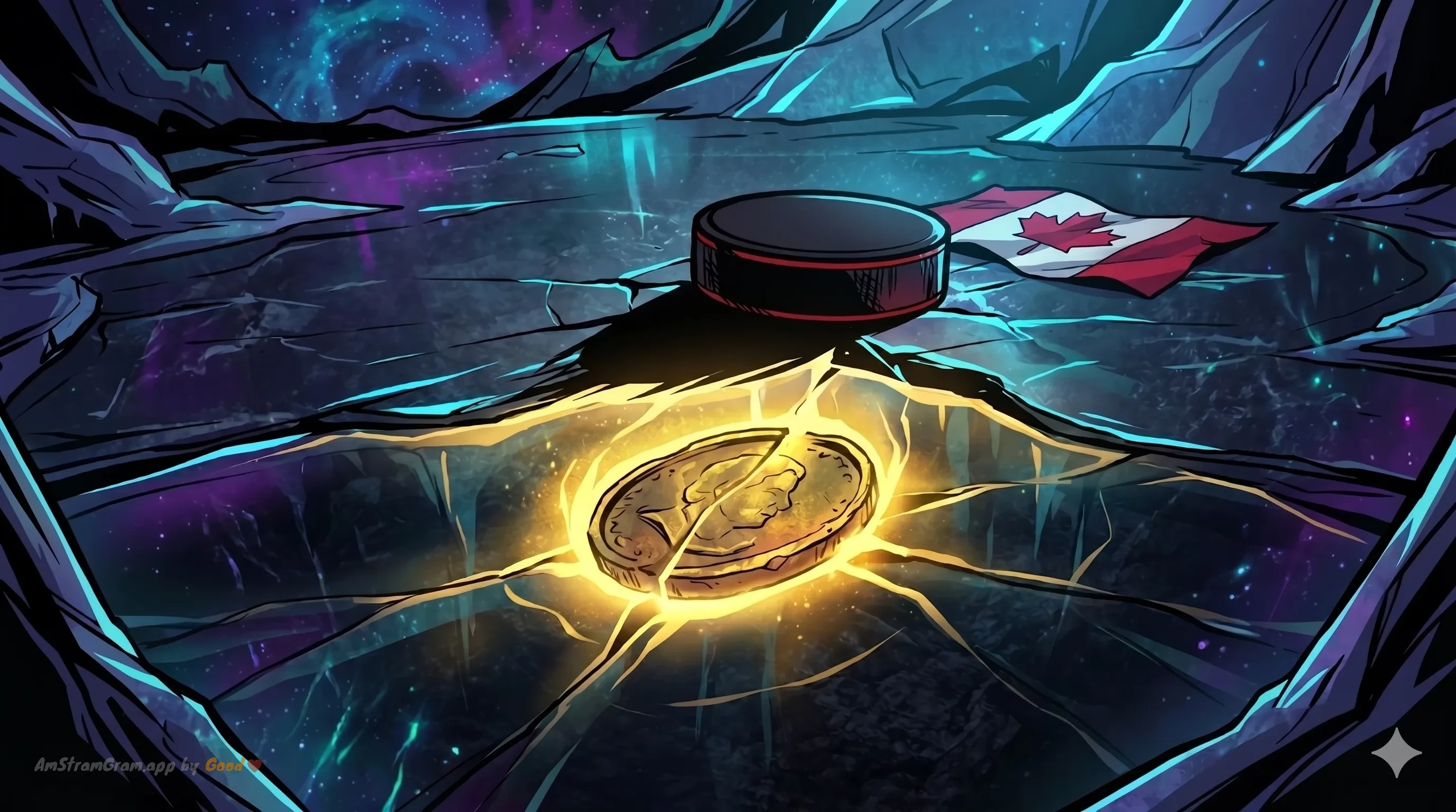
In the land of eternal winter, luck hides in the ice and on boats. Between Quebec legends and hockey rituals, Canada has its own rules for taming destiny.
Canada, with its harsh winters, vast forests, and wind-swept coasts, has developed unique folklore blending Indigenous traditions, Quebec legends, and modern superstitions. Here, luck hides in the ice of rinks, in the calls of birds, and especially... far from bananas on boats!
From the "Lucky Loonie" that led the Canadian team to Olympic gold, to the ban on bananas on fishing boats, discover the most fascinating superstitions of the Great White North. 🏒
The Lucky Loonie: The Magic Coin of the Olympics
This is Canada's most famous superstition in the world, and it was born from a spontaneous gesture in 2002. At the Salt Lake City Olympics, a Canadian ice technician named Trent Evans had an idea: hide a Canadian $1 coin (a "Loonie," named after the loon engraved on it) under the center ice dot before hockey games.
The result? The Canadian men's team won gold, and the women's team too! Since that day, the "Lucky Loonie" has become a sacred ritual. At every major hockey competition, Canadian technicians secretly bury a coin under the ice to bring luck to their team.
This tradition has even spread: some Canadians bury Loonies in their garden, under their porch, or in their garage to attract luck. It has become a national symbol of good fortune.
💡 Did You Know?
In 2010, at the Vancouver Olympics, Canada buried 11 Loonies under different rinks for each game. Result? Double gold medal (Men and Women) again! The original 2002 coin is now displayed at the Hockey Hall of Fame in Toronto.
No Bananas on Board: The Absolute Ban
On Canada's Atlantic coast (the Maritimes), this superstition is taken very seriously. Bringing a banana on a fishing boat is considered bad luck. Fishermen believe it prevents fish from biting, causes engine failures, or attracts storms.
The origins of this belief are multiple:
- Bananas rotted quickly in ship holds, attracting rats and disease.
- In the past, bananas traveled with venomous spiders hidden in bunches.
- Ships carrying bananas often had accidents or delays.
Even today, many Canadian fishermen categorically refuse to board with bananas. Some even check provisions before going to sea. It's a non-negotiable rule!
💡 Other Maritime Bans
Some fishermen also avoid whistling on board (calls the wind), wearing green (color of death at sea), or changing the boat's name without a purification ritual. But the banana remains the most universal ban.
The Loon's Call: The Weather Bird
The loon is Canada's emblematic bird, featured on the $1 coin and in the country's lakes. For Canadians, especially those living near lakes, the loon's behavior is a weather omen.
If the loon calls at night: It's a sign that rain or a storm is coming the next day. Its melancholic and piercing call would be the bird's way of predicting weather changes.
If the loon tries to fly toward the moon: It's an even stronger omen of bad weather to come. Canadians say the bird "reads" signs in the sky and tries to fly away before the storm arrives.
This belief is so ingrained that many Canadians plan their outdoor activities based on loon behavior. It's a form of popular meteorology passed down from generation to generation.
🎯 In Summary
Canadian superstitions reflect a country where nature dictates the rules and hockey is a religion. From the Lucky Loonie that brings luck to Olympic teams, to the ban on bananas on boats, to the loon's premonitory call, each belief has a story and a reason for being.
👉 Hide your coin under the ice, leave bananas on land, and listen to the loon's call! For the rest, let chance and the stars do their work.
Hide Your Coin and Leave Bananas on Land!
For the rest, let destiny do its work: roll the dice or check your daily horoscope to see if luck is with you.
 Roll the Dice
















💬 Commentaires
Chargement des commentaires…
Laisser un commentaire