Poker: More Than Just a Game of Luck
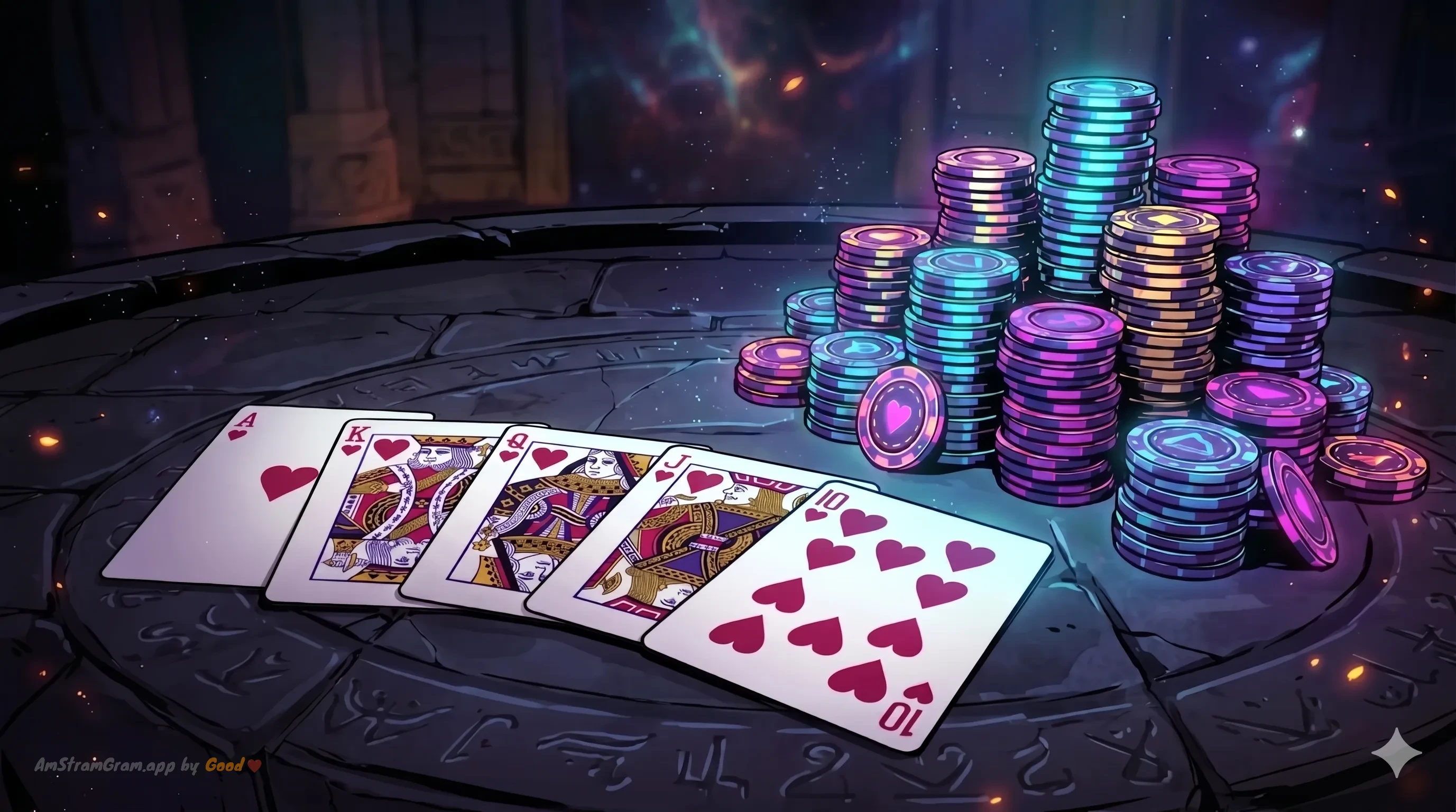
From smoky saloons to televised Las Vegas tables, Poker tells a story of risk, mathematics and human psychology.
From the Mississippi to the World Series of Poker
Poker didn’t appear overnight in an air‑conditioned casino. Its roots go back to the 19th century along the Mississippi River, where steamboats carried merchants, adventurers… and professional cheats.
People were already playing card games like the French and German “poque/pochen”, which mixed betting, bluffing and honour duels. Gradually, these games evolved into a new format: Poker, built around five‑card combinations and betting rounds.
In the 20th century, Poker moved from riverboats to Western saloons, then to the casinos of Las Vegas. In 1970, the Binion’s Horseshoe casino hosted the first edition of what would become legendary: the World Series of Poker (WSOP). Every year, the famous Texas Hold'em Main Event crowns an unofficial world champion.
🎥 When TV changed everything
In the 2000s, under‑table cameras let viewers see players’ hole cards. Result: Poker became a global spectacle, mixing strategy, drama and spectacular bluffs.
Texas Hold'em rules: the star variant
There are dozens of variants (Stud, Omaha, Draw…), but the most played in the world is Texas Hold'em. Here is the principle, in simple terms:
- Hole cards: each player receives 2 private cards, visible only to them.
- Community cards: the dealer gradually deals 5 community cards face up in the middle of the table, visible to everyone.
- Objective: build the best possible 5‑card hand using any combination of your 2 cards and the 5 on the board (e.g. your 2 + 3 community, or 1 + 4, or even only the 5 community cards).
- Betting rounds: after each stage (preflop, flop, turn, river), players can call, raise or fold.
- Who wins? either everyone folds except one player (who wins the pot), or several players reach the showdown and compare their hands.
Concrete example
Your cards: A♠ K♠
Board: 10♠ – J♠ – Q♠ – 3♦ – 2♣
You have a Straight Flush (10–J–Q–K–A of spades), one of the strongest hands in the game.
Hand rankings: from simple pair to ultimate grail
To really enjoy Poker, you need to know the order of hands. Here is a reminder from rarest to most common:
1. Royal Flush
10, J, Q, K, A of the same suit (e.g. all spades). The ultimate hand.
2. Straight Flush
Five cards in sequence and of the same suit (e.g. 5–6–7–8–9 of diamonds).
3. Four of a Kind
Four cards of the same rank (e.g. four Kings).
4. Full House
A Three of a Kind + a Pair. Example: three Queens and two 8s.
5. Flush
Five cards of the same suit (e.g. five clubs) that do not form a straight.
6. Straight
Five cards in sequence, but not all of the same suit.
7. Three of a Kind
Three cards of the same rank (e.g. three Jacks).
8. Two Pair
Two different pairs (e.g. two Queens and two 9s).
9. One Pair
Two cards of the same rank (e.g. two Aces).
10. High Card
No combination: you compare the highest card, then the next one, and so on.
🎯 Memory tip: remember the logic: straight + flush (Straight Flush) beats everything, then come repeated ranks (Four of a Kind, Full House, Three of a Kind, Pair…).
Poker in the mind: bluff, reads and storytelling
If Poker were only about having the best cards, it would be far less fascinating. Its real depth lies in psychology:
- Bluff: betting big with a weak hand to make your opponent believe you’re strong and force them to fold.
- Value betting: the opposite: betting with a strong hand, but in a way that worse hands will still call.
- Reading opponents: watching timing, bet sizing and behaviour to guess the real strength of their hand.
🧠 Poker as a “story machine”
A good player doesn’t think only in terms of cards, but in terms of coherent stories: “If my opponent really had a monster hand, would they play like this?”, “Is it believable that I represent a draw that just hit?”.
Bluffing is not an invitation to lie in real life, but a coded game where everyone knows the rules: we accept that others try to mislead us, and we try to see through their act. That’s what makes Poker so rich on a human and cultural level.
Probabilities, discipline… and responsibility
Behind every Poker hand lie precise probabilities. For example, with two suited cards, your chance of completing a flush by the river is about 35%. With a pocket pair, you will hit a set on the flop roughly 1 time out of 8.
The best players don’t rely on “good luck”, but on:
- Bankroll management (never risking money you need in real life),
- Patience (accepting to fold 9 times to make a great decision the 10th),
- Clear‑headedness (knowing when to stop when tired or on tilt).
⚠️ A game to approach carefully
On AmStramGram, we talk about Poker as a cultural and mathematical object. In real life, it often involves real money and therefore addiction risks. It should remain a framed form of entertainment, never a solution to financial problems.
In a nutshell
Poker is a unique mix of combinatorics (possible hands), probabilities (outs, chances to improve) and psychological theatre (bluffing, table image).
Whether played with plastic chips among friends or watched on TV finals, it always tells the same story: how humans deal with risk, fear… and their ego.










💬 Commentaires
Chargement des commentaires…
Laisser un commentaire