Reading palm lines: a simple palmistry guide
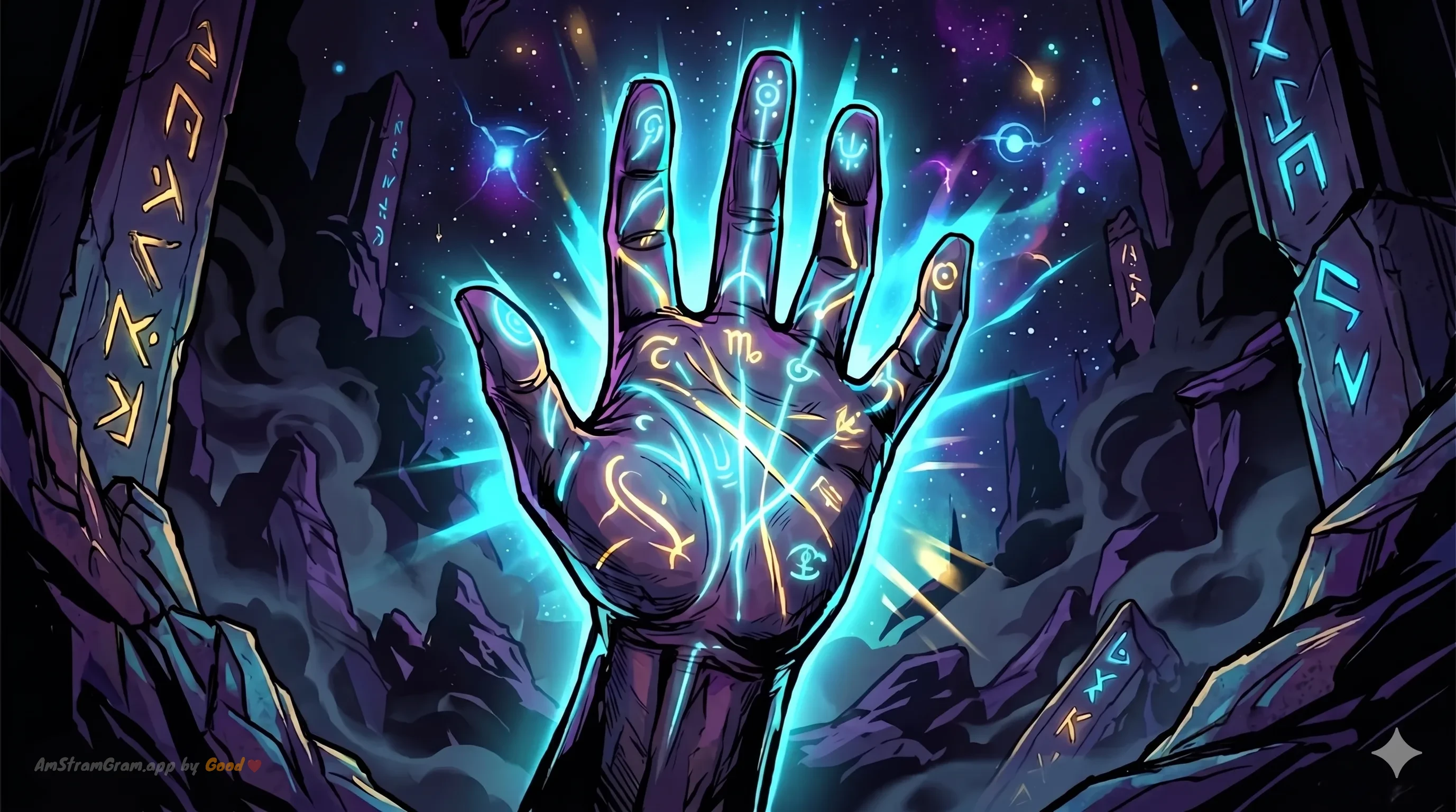
Heart, head, life, fate: four lines, one palm, and a story to reread—without fatalism.
You open your hand. It looks ordinary… and yet it feels like a map. Roads, crossroads, areas that stand out, others that fade. For centuries, palm readers have treated the palm as a personal compass: emotions, temperament, energy, aspirations.
Palmistry isn’t a science in the modern sense. It’s a symbolic language—a way to tell a story about a path. And like any good language, it’s useful when it helps you reflect, not when it traps you in a verdict.
✋ Which hand should you read?
A common traditional rule is:
- Left hand: innate potential, what feels “given” (temperament, natural sensitivity).
- Right hand: action and acquired traits—what you’ve built through choices and experience.
Some schools swap this for left-handed people (dominant hand = action). In practice, the most helpful move is to compare both hands: what strengthens, fades, or shifts often mirrors the gap between potential and lived reality.
🧭 The 4 major lines (quick landmarks)
Most palms show four main lines. They aren’t always all prominent (that’s normal):
- Heart line: emotions, attachment, how you love.
- Head line: intellect, thinking style, decision-making.
- Life line: vitality and rhythm—not lifespan.
- Fate line: direction, accomplishment, relationship to goals and work.
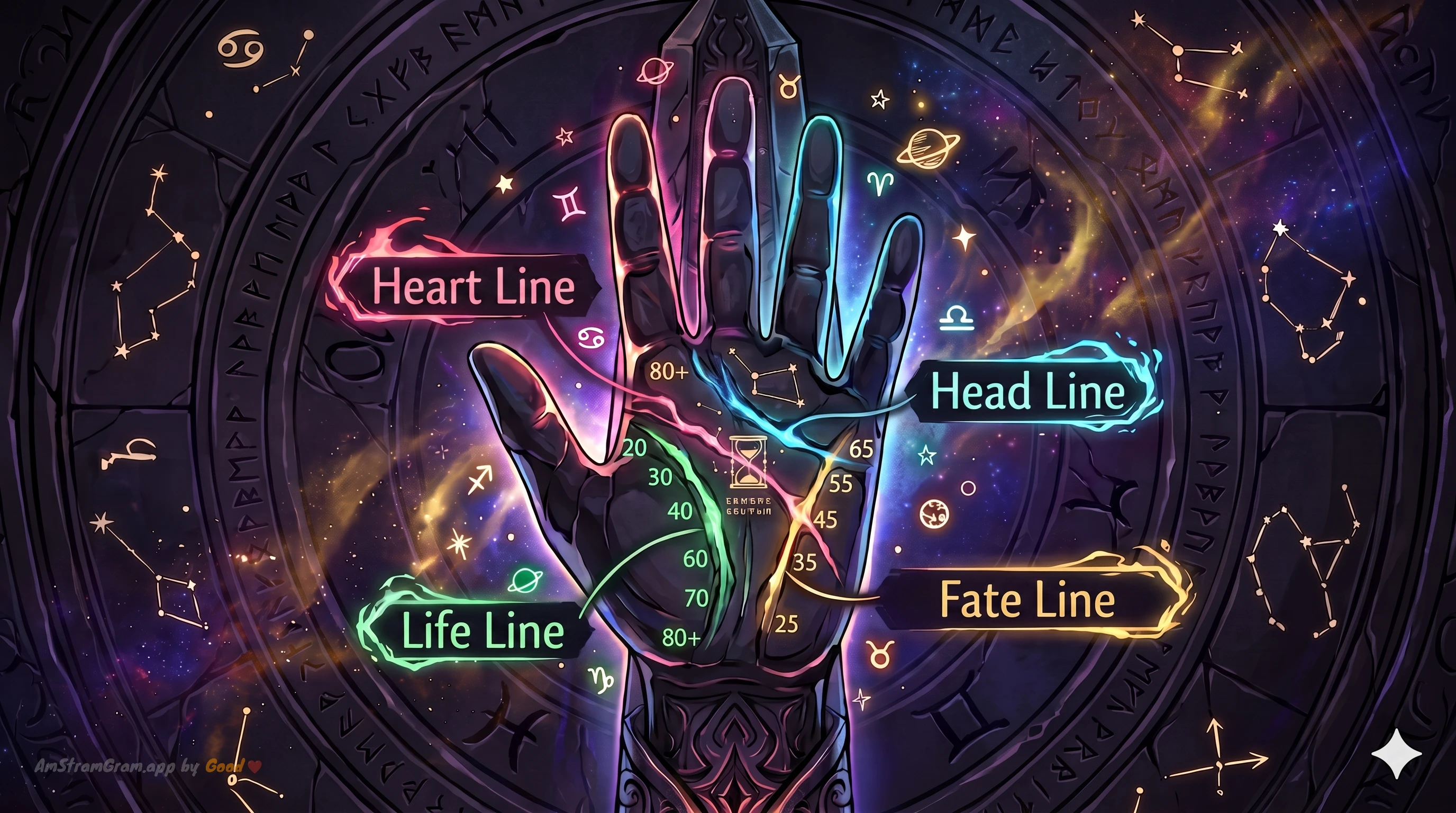
❤️ Heart line: emotions and relationships
The heart line sits under the fingers, near the top of the palm. It’s linked to affection, bonding, trust, loyalty, and how feelings are expressed.
What readers often look at
- Long and clear: steady emotional tone, deep attachment, need for consistency.
- Thin or broken: sensitive, fluctuating periods, need for safety or time.
- Very curved: expressiveness, romantic impulse, spontaneity.
- More straight: restraint, emotional pragmatism, privacy with feelings.
A subtle line doesn’t mean “no heart”—often it means feelings lived inwardly.
🧠 Head line: intellect and reflection
The head line crosses the middle of the palm, often starting between the thumb and index finger. It’s associated with logic, imagination, focus, and the way you process information.
Classic readings
- Straight and marked: structured thinking, practicality, rational decisions.
- Curving downward: imagination, intuition, creative mind.
- Very long: analytical stamina, desire to understand deeply.
- Small breaks: shifts in mindset, new perspectives, mental “resets”.
A useful question: do you think to act, or act to think?
🌿 Life line: energy and path (no doom)
The life line often arcs around the thumb. It’s loaded with myths—so it’s worth being clear about it.
Important: the life line does not predict lifespan. In palmistry it’s read as vitality, momentum, recovery, and major rhythm changes.
Common cues
- Deep and regular: stable energy reserve, resilience.
- Lighter: more variable energy, need for rest, stress sensitivity.
- Branches outward: curiosity, movement, desire for change.
- Weaker zones: transition periods, fatigue phases, lifestyle adjustments.
Think of it like inner weather: it doesn’t announce an “end”, it suggests a rhythm.
⭐ Fate line: direction and accomplishment
Not everyone has a strong fate line. When present, it often runs vertically from the base of the palm toward the center. It’s linked to life direction, responsibilities, work, and the feeling of being “pulled” by a purpose.
How to read it
- Clear and continuous: steady direction, persistence, coherence.
- Faint or absent: freer path, many options, no “prewritten” script.
- Interrupted: reinventions, career shifts, major turning points.
- Multiple segments: several “lives” (successive projects and identities).
This is the most narrative line: it speaks less about events and more about meaning. And meaning can be built—like a wheel turning: you can’t control everything, but you can choose how you play.
🔎 A tiny method to avoid overthinking
- Light: natural light, relaxed hand, open palm.
- Compare: left vs right to see “potential / action”.
- Start big: overall clarity first, details second.
- Think trends: periods and tendencies, not verdicts.
Questions & answers
Which hand should you read to know your destiny?
Left for innate potential, right for what you build through choices—not fixed fate.
Does a short life line mean a short life?
No: it points to vitality and energy, not longevity.
Can palm lines change over a lifetime?
Yes: they evolve with your choices and lifestyle.
Can palmistry really predict the future?
It is a tool for self-knowledge and tendencies—not fixed destiny.
🌠 Conclusion: a map—and a compass
Reading palm lines is a simple idea: we have inclinations, habits, and strengths… and we also have choices. At its best, palmistry doesn’t lock you in—it gives you a symbolic mirror.
And if destiny is a thread, then your decisions are the knots. At AmStramGram, we love chance—but we love even more what you do with it.







💬 Commentaires
Chargement des commentaires…
Laisser un commentaire