
 Math & Games
Roulette: The Queen of Casinos Explained
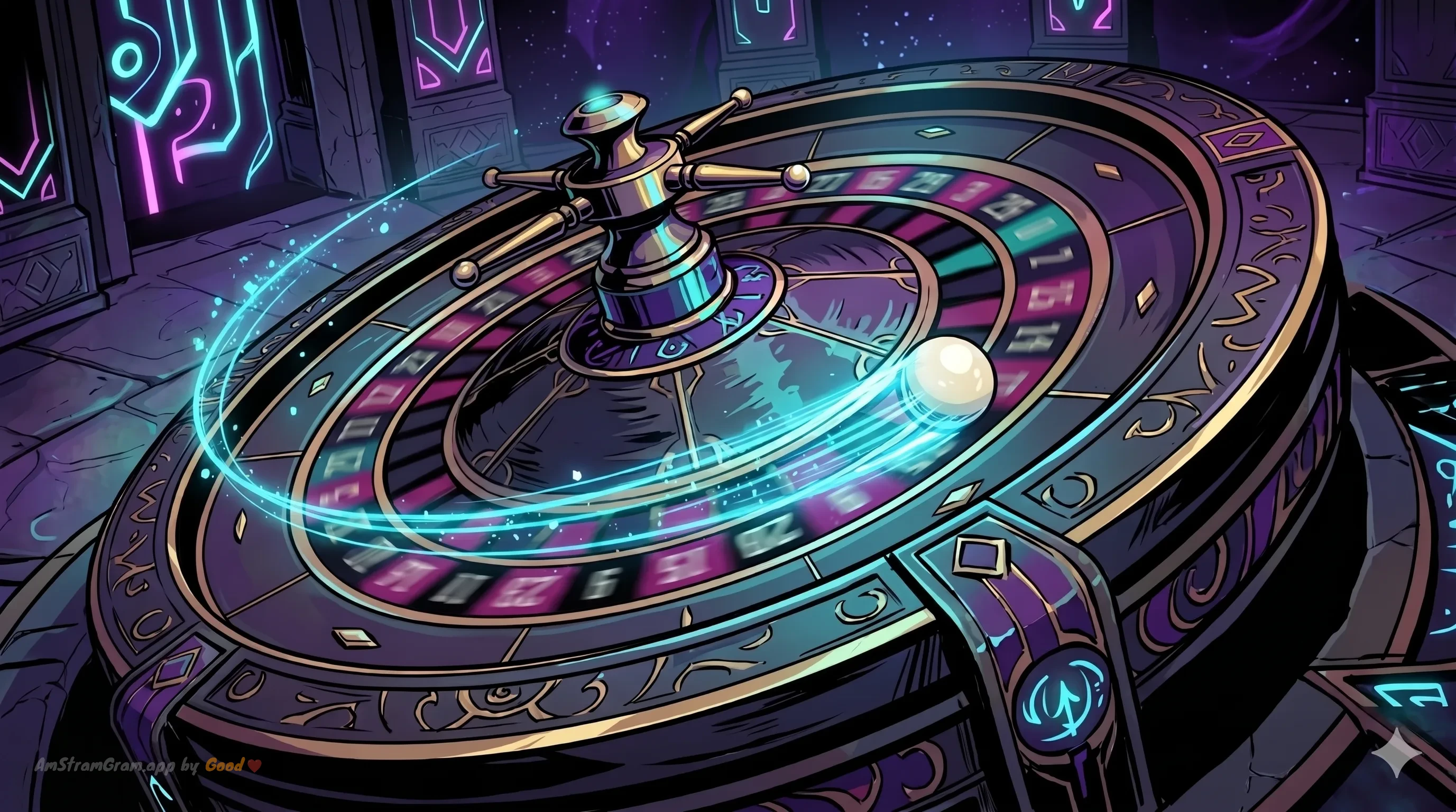
One ball, one wheel, a set of numbers… and lots of probability theory. Let’s look past the glamour and see what the maths really say.
An accidental invention by Blaise Pascal?
Legend has it that roulette was born from a failed experiment. In the 17th century, French mathematician Blaise Pascal attempted to design a perpetual‑motion machine, a wheel that would spin forever without external energy.
Physics, of course, forbids that kind of magic. But this wheel‑and‑compartments device ended up inspiring a new type of game of chance, first in France and then across Europe: roulette.
In the 19th century, casinos such as those in Monte Carlo turned it into a symbol of luxury and glamour. Today, roulette remains one of the most iconic games in land‑based and online casinos.
European vs American roulette: a story of zeros
At first glance, all roulette wheels look the same: one wheel, numbers from 0 to 36, alternating red and black pockets. But one detail changes everything: the number of zeros.
🎯 European roulette
- Contains numbers 0 to 36 → 37 pockets in total.
- Single zero: 0 (green).
- Probability that the ball lands on a given colour (red or black): about 18/37 ≈ 48.65 %.
- House edge on even‑money bets (red/black, odd/even, etc.): ≈ 2.7 %.
American roulette
 American roulette
- Contains numbers 0 to 36 + a 00 pocket → 38 pockets.
- Two zeros: 0 and 00 (green).
- Probability of hitting a colour: 18/38 ≈ 47.37 %.
- House edge on even‑money bets: ≈ 5.26 %.
💡 A tiny zero that changes everything
The zeros are neither red nor black, neither odd nor even. They are the built‑in margin of the casino. By adding the “00”, American roulette almost doubles this advantage. For a rational player, European roulette is therefore significantly less unfavourable.
Martingales: why “doubling to catch up” is a bad idea
The most famous roulette betting system is the martingale. It looks irresistibly simple:
- You bet 1 unit on a colour (for example: red).
- If you win, you gain 1 unit and go back to the starting bet.
- If you lose, you double your next bet (you stake 2, then 4, then 8, etc.).
- The idea: the first win reimburses all previous losses + 1 unit of profit.
On paper, it looks like a fool‑proof strategy. In practice, it is a mathematical illusion.
1️⃣ The problem of limits and bankroll
With every loss, the stake doubles. After 8 consecutive losses, you are already staking 256 units. After 10 losses, 1024 units. Yet:
- Your budget is not infinite.
- Casinos impose maximum table limits.
A slightly long losing streak is enough to break the system: you can no longer double, and you suddenly realise a huge loss.
2️⃣ The expected value stays negative
Even with a martingale, each individual spin keeps the same expectation:
- On a European wheel, expected value is about -2.7 % of the stake per spin.
- The martingale does not remove this average loss; it merely concentrates it into a few very expensive spins.
You win a little, often, but lose a lot, rarely. In the long run, the maths are clear: the expectation remains negative.
⚠️ A lab, not a life strategy
Martingales are a great pedagogical tool to understand expected value and the limits of “systems”. But in real life, they never turn a losing game into a money‑making machine.
Roulette as a randomness lab
Stripped of glamour and ads, roulette is a fascinating mathematical object. It lets us explore:
- the difference between randomness and the illusion of control,
- the notion of expected value (a small disadvantage repeated many times),
- the dangers of cognitive biases (“red hasn’t come up for a while, it’s due to hit!”).
Used in an educational context, with no financial stakes, roulette becomes an excellent way to talk about probabilities, statistics and risk management.
In conclusion
Roulette truly deserves its title as the “queen of casinos”: simple to understand, visually spectacular, yet subtle in its mathematical implications.
But behind the spinning ball, the laws of probability remain inflexible: in the long run, the house always wins. The best way to enjoy roulette is therefore to see it as a scientific curiosity game, not a strategy for getting rich.











💬 Commentaires
Chargement des commentaires…
Laisser un commentaire