Birth Chart vs Horoscope: What’s the Real Difference?
Daily horoscopes are entertaining. But they miss the mark… a lot. Not because astrology is “fake”— but because you’re getting the generic version of you.
Most mainstream horoscopes start with one true thing (your zodiac sign)… then stretch it into a message for millions of people. Sometimes it resonates. Often it doesn’t. And you end up thinking it’s just random.
A birth chart isn’t a “premium horoscope”. It’s a precise sky map calculated from your exact birth time and place. That’s the shift: from broad vibes to a structured, personal read.
If you like symbolic tools that feel practical (not fatalistic), you might enjoy our palmistry guide too: Reading palm lines: a simple palmistry guide .
Horoscopes (the tip of the iceberg)
When you read “Aries”, “Cancer” or “Libra” in a typical horoscope, it’s almost always based on a single factor: your Sun sign (where the Sun was when you were born). It matters—but it’s like summarizing a movie by its trailer.
Why does it feel vague? Because it’s written for everyone. Two “Leos” can have:
- a totally different Moon (needs, emotional security)
- a completely different Rising sign (how you show up)
- different houses (which life areas are activated)
And yet they get the same line: “you’ll have to make a choice.” Welcome to being human.
A Birth Chart (your personal sky map)
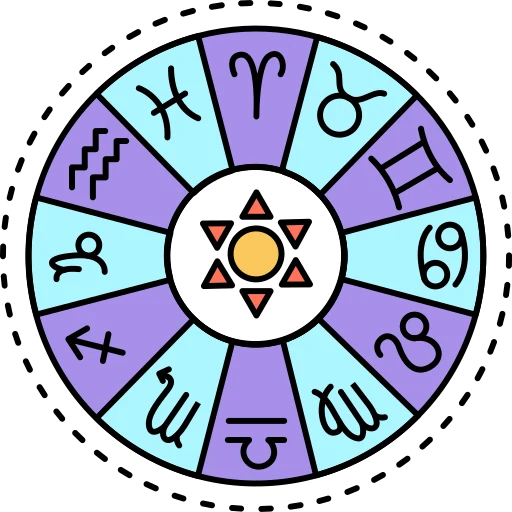
A birth chart is a snapshot of the sky at the moment you were born. It includes planets, signs, aspects (angles between planets), and especially the houses—the life areas where everything plays out.
The “Big 3”: Sun, Moon, Rising
If you remember only three things, make it these. Together, they explain why you don’t always relate to your horoscope.
- Sun: your core drive, direction, long-term growth.
- Moon: your inner world—what you need to feel safe and grounded.
- Rising: your “front door”—how you start, react, adapt, and show up.
A quick example: a “fire” Sun may sound outgoing in a Sun-sign horoscope, but a deeply “water” Moon can make you intense, sensitive, and private. Horoscopes see the fire. Charts see the whole system.
Why birth time and place matter
Your birth time is key for calculating your Rising sign and your houses. That’s where astrology becomes practical: not just “what”, but where it shows up in your life.
Two people born on the same day can share the same Sun. But if one is born at 6am and the other at 8pm, their Rising sign and house layout can be completely different—meaning different priorities, triggers, and timing.
The 12 Houses: “which life area?”
Houses make a reading actionable. They answer what a generic horoscope often skips: Okay… but where does this play out, exactly?
- 1st: identity, body, presence
- 2nd: money, resources, self-worth
- 3rd: learning, communication
- 4th: home, roots, private life
- 5th: joy, love, creativity
- 6th: routines, work, health
- 7th: relationships, commitments
- 8th: intimacy, transformation
- 9th: meaning, travel, beliefs
- 10th: career, public life
- 11th: friends, community, goals
- 12th: subconscious, rest, letting go
See the difference? A horoscope says “big changes.” A chart can say “changes in the 10th: career” or “in the 4th: home/family.”
Which one should you use?
A horoscope can be a light ritual—a mood, a daily intention. A birth chart is about understanding yourself: needs, contradictions, drivers, and what truly recharges you.
🔥 Discover your real sky map
Stop being “kind of” your sign. Generate your Birth Chart on AmStramGram: Big 3, houses, and a reading designed to be clear—and actually useful.
 Generate my Birth Chart
Instant results • Psychological reading
One-sentence recap
A horoscope is usually Sun-sign based; a birth chart is personalized using your exact time/place plus your Big 3 and houses—so it actually fits you.