Native American Mythology: Spirits of Luck and Fate
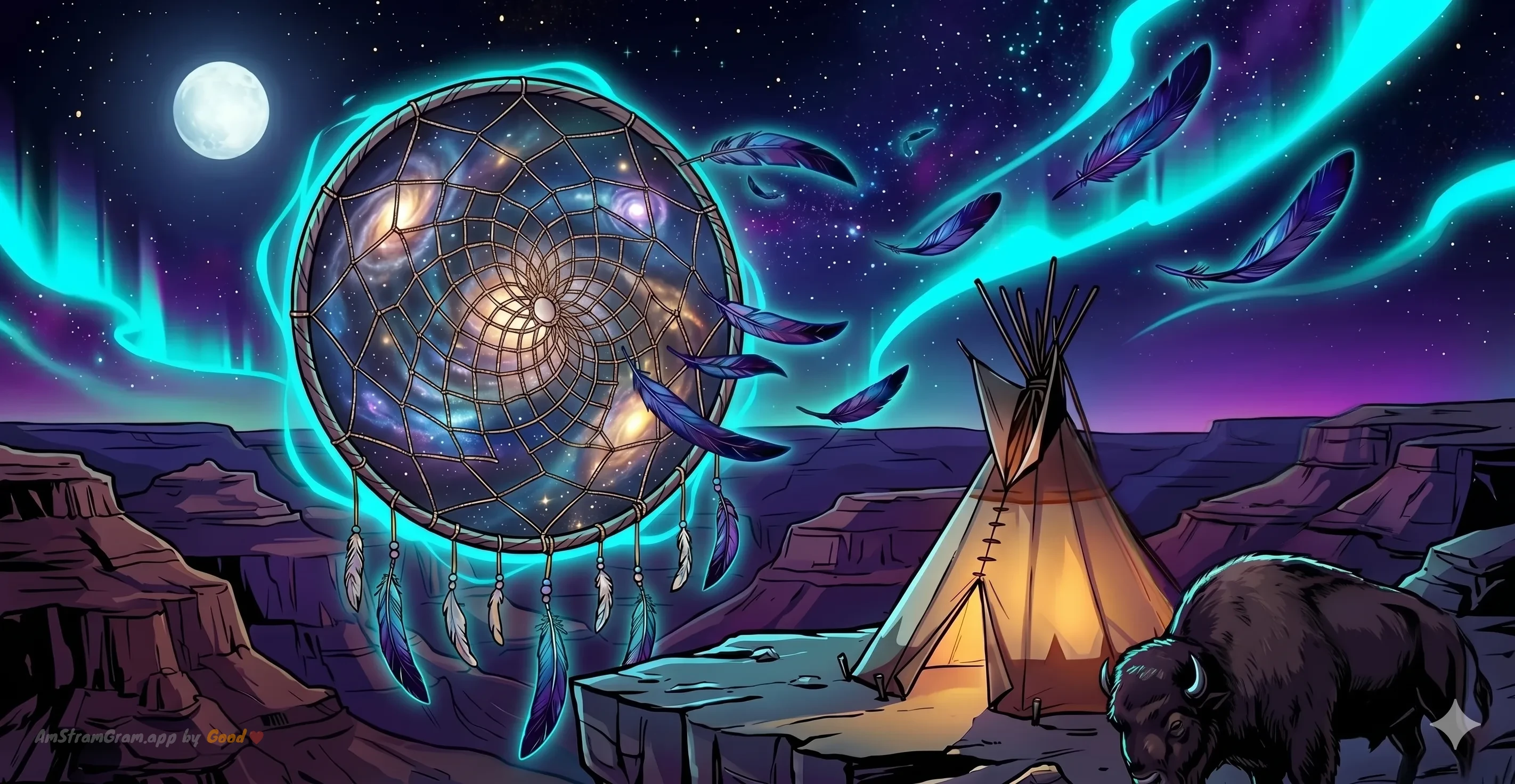
When fate is not a straight line but hide-and-seek with the living world — with Coyote, Iktomi, Raven and Kokopelli.
In many Indigenous traditions of North America, destiny rarely looks like a text written in advance. It is closer to an ongoing conversation with the living world: wind, animals, spirits and ancestors all take part. Oral stories matter deeply — and it is often through tricksters, morally ambiguous spirits, that chance, luck and sudden reversals enter the tale.
Unlike a worldview where everything is fixed, these myths suggest an open universe: a careless act can derail everything; a clever move can open a door again. The “lucky break” and the “bad trick” are two sides of the same coin — which makes Native storytelling a powerful way to think about the unexpected in daily life.

Explore the Deity Codex
Find Coyote, Iktomi, Raven, Kokopelli and all deities — Greek, Norse, Egyptian, Chinese, Japanese and Native American — in our interactive Codex.
Coyote, master of chance
Coyote appears in hundreds of stories: sometimes he shapes parts of the world, sometimes he breaks them through vanity or curiosity. He is neither purely good nor evil — he is unpredictable. By playing with fire, death or social order, he shows that creation can be as chaotic as it is playful — and that the “luck” of surviving his blunders often comes from the humility we learn. For listeners today, Coyote reminds us that no plan fully controls reality: we must adapt when the scene shifts.
Iktomi and the web of fate
In Lakota tradition, Iktomi, the spider spirit, weaves traps as clever as they are fragile. He embodies the lure of the game and the moral wager: trick others for gain — until the net closes on him. This boomerang of fortune is a recurring lesson: to manipulate fate is to risk being manipulated in turn. The “web of destiny” is not only a symbol of connection between beings; it is also a mesh of consequences where every pulled thread moves the whole structure.
Raven’s cunning and Kokopelli’s luck
On the Northwest Coast, Raven is a leading figure: through successive ruses, he sometimes steals light, water or treasures hoarded by beings too stingy to share. His boldness changes the course of events — at the cost of disorder. It is another way of saying that fate can be renegotiated through wit and daring, but never without a price.
In the Southwest, Kokopelli, the humpbacked flute player, arrives like a traveller announcing fertile seasons and the joy of meeting. Where Coyote scrambles the map, Kokopelli often embodies luck from outside — a guest who brings news and abundance. Together, these figures balance instructive chaos and the promise of renewal.
Conclusion: managing luck today
These myths do not offer a spell to “force” fortune. They suggest an ethics of the unexpected: stay attentive, avoid arrogance, accept that our schemes may backfire — and learn to spot openings when they appear, like Kokopelli’s passage. In a world obsessed with control, Native tricksters invite us to live with chance without denying or dramatizing it: a stance both lucid and light, worthy of the finest tales.
Sources
Let fate decide for a moment
Spin the wheel or flip a coin on AmStramGram — the way storytellers lived with the unexpected.
 Spin the Wheel
 Heads or Tails












💬 Commentaires
Chargement des commentaires…
Laisser un commentaire