Norse Mythology: The Norns, Runes and Destiny (Wyrd)
For the Vikings, the concept of luck did not really exist. Everything was governed by « Wyrd » (inescapable destiny). Discover how Odin and the weavers of fate influenced the lives of mortals and gods.
Norse mythology leaves little room for chance as we understand it. For the Scandinavian peoples of the Viking Age, Wyrd — personal and cosmic destiny — governed all existence. The gods themselves were subject to it, up to Ragnarök. In this world of ice, fire and Yggdrasil, three female figures carve each one's fate; a one-eyed god hung for nine nights from the world tree to bring back the Runes, symbols of power and divination. This article guides you to the heart of this vision of destiny.
Explore the Deity Codex
Discover all mythological deities — Greek, Norse, Egyptian, Chinese and Japanese — in our interactive Codex.
The Norse Pantheon (Æsir and Vanir)
Norse mythology distinguishes two divine families: the Æsir, warrior and sovereign gods, and the Vanir, associated with fertility, nature and wealth. After a war, the two clans made peace and exchanged hostages; the Vanir Freyja and Freyr now live among the Æsir.
Among the major figures: Odin (Óðinn), father of the gods, god of war, wisdom and magic; Thor (Þórr), god of thunder and protector of humankind; Freyja, goddess of love, magic (seidr) and death; Loki, a giant adopted by the Æsir, cunning and trigger of Ragnarök; Tyr (Týr), god of law and oath, who lost his hand to bind the wolf Fenrir. At the centre of everything stands Yggdrasil, the world tree linking the nine realms, at whose foot the Norns sit.
The Norns: Those Who Carve Destiny
The Norns are the Norse equivalents of the Greek Fates. They dwell by the well of Urd, at the foot of Yggdrasil, and carve the destiny of every being — mortals and gods — into the bark of the tree or on tablets. Their names embody the three dimensions of time:
- Urd (Urðr) — « the past »: what has been woven and cannot be undone.
- Verdandi (Verðandi) — « the present »: what is coming to pass.
- Skuld (Skuld) — « the future »: what must happen, the debt of destiny.
Their decrees are final. Even the Æsir cannot defy them: Ragnarök — the end of the world and the death of many gods — is already written in Wyrd. The Norns are not goddesses to be prayed to for « luck »; they personify an order to which the whole cosmos obeys.
Odin, the Sacrifice and the Magic of the Runes
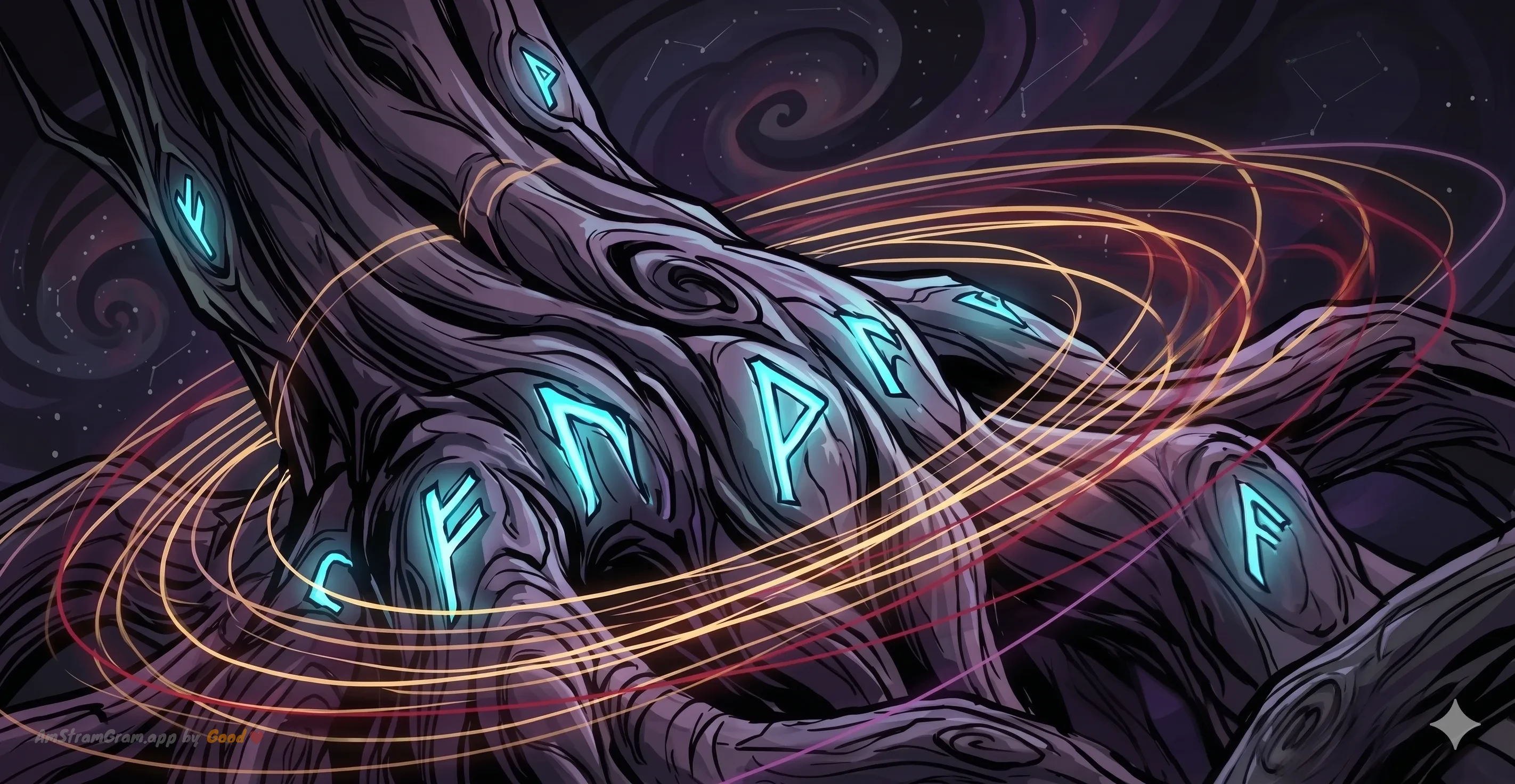
To gain knowledge of the Runes, Odin sacrificed himself to himself: he hung from a branch of Yggdrasil, pierced by his own spear, for nine days and nine nights. At the end of this ordeal, the Runes were revealed to him — symbols of writing, magic and divination.
Runes were used as magical lot-casting: they were carved on wood or stone, thrown or drawn, and their layout was interpreted to read the future, make important decisions or probe the will of the gods. This practice echoes our modern need to « let chance decide » — whether by dice, the wheel of fortune or a random draw. On AmStramGram, you can use our wheel of fate, our dice or our heads or tails to make a decision or simulate a draw, in a fun and modern spirit.
Sources and References
To learn more about Norse mythology, the Norns and Wyrd, here are authoritative resources:
FAQ – Vikings and Destiny
Is there a god of luck in Norse mythology? +
Who are the equivalents of the Greek Fates? +
How did the Norse read the future? +
Like Odin: let fate decide
Spin the wheel, roll the dice or flip a coin to make a decision the way the ancient rune casters did.
 Spin the Wheel
 Heads or Tails

💬 Commentaires
Chargement des commentaires…
Laisser un commentaire