
The Luck Code: Ultimate Guide to Modern White Magic Rituals

Ancient symbols, modern brain: a premium field guide to luck rituals, abundance rituals, moon water, spell jars and spiritual self-development — lucid, poetic, evidence-friendly.
Introduction
For as long as anyone can remember, people have looked for ways to make peace with uncertainty — not to “hack the universe”, but to breathe when the ground shakes.
Rituals exist in every culture: gestures, offerings, incense, song. Our brains love symbols — they compress meaning into an image, a scent, a flame. Repetitive motion lowers stress by telling the body: “there is a sequence; I am not lost.”
A ritual is like a line of code sent to your mind’s algorithm: you may not change the world in an instant, but you can change the state in which you perceive it — and therefore how you respond.
Cognitive psychology talks about bias and attention. Mindfulness talks about presence. Traditions talk about cycles, elements, purification. AmStramGram weaves all three: symbolic + psychological + playful tech — never promising a supernatural miracle.
Why rituals really work
Rituals don’t “break reality”: they reframe attention. Psychologist Richard Wiseman showed that “lucky” people often share habits — openness, persistence, turning accidents into opportunities. Cognitive and experimental psychology, plus behavioural neuroscience, describe similar mechanisms in elite athletes: pre-performance routines, imagery, sensory anchoring — not gullible superstition, but bridges between body and intention.
- Cognitive biases — rituals can prime useful selective attention.
- Positive expectancy — belief + gesture can shift motivation (without denying science).
- Mental imagery — the brain rehearses representations.
- Anxiety reduction — breath + familiar sequence soothe the nervous system.
- Neuroplasticity — repetition makes confidence and action smoother.
- Emotional anchoring — scent, light and sound recall intention effortlessly.
Principles of modern white magic
Here, modern white magic means an ethic of intention: clarify a desire, respect life, honour traditions without caricature, and seek wellbeing — yours and others’. Superstition says “if I skip X, harm will strike.” Symbolism says “X reminds me of Y.” Fire, water, air, earth, sound, light, scent and lunar rhythms are universal languages — they speak to the body first.
Ritual encyclopedia
1. The green abundance candle
The flame holds your gaze; green reads as growth (symbolic, not a bank guarantee). A classic candle ritual for modern white-magic practice.
- Stable surface, ventilation, safety plan.
- Carve one realistic word into the wax.
- Optional olive oil while picturing a plausible outcome.
- Three slow breaths, feet grounded.
- Light; gaze 3–5 minutes — steady flame supports focused meditation.
- Extinguish safely; schedule one action within 24h.
Psychology: flame reduces rumination; colour gives semantic framing.
Minimal variant: white candle + intention card under the holder.
2. Moon water
Moon water uses lunar symbolism (full moon / new moon) to build a cyclical routine — poetic calendar, not proven infusion of powers.
- Clean jar, filtered water, light breathable cover.
- Speak or write one intention.
- Leave overnight safely; label the date.
- Use symbolically (plant watering, mist) as sensory reminder.
3. Spell jar
Salt, bay, cinnamon, mint, lavender, handwritten paper — olfactory memory + visual nudges for your subconscious.
- Write one sentence in the present tense.
- Layer ingredients mindfully.
- Seal; place where you’ll glimpse it sometimes.
- Each glimpse: one breath + one step toward the goal.
4. Mirror ritual
Daily positive mantra for 2–4 minutes: posture, voice, gentle eye contact. Example: “I choose clarity and I own my decisions.”
5. First-of-month cinnamon
Folkloric money luck ritual gesture — scent marks a fresh start, not a promise of cash.
6. Smoke cleansing
Sage, palo santo, incense — respect cultural lineages. Modern alternative: diluted essential oil spray + open windows = symbolic energy protection ritual for mental space.
7. Mystic vision board
Collage + weekly review. Visualization supports persistence when paired with plans — not magic alone.
Common mistakes
| Mistake | Why it hurts | Fix |
|---|---|---|
| Waiting for miracles | Disappointment when nothing “falls from the sky”. | Link every ritual to one small, measurable action. |
| No action | Rituals never replace work. | Calendar + 25-minute blocks. |
| Vague intentions | Your brain doesn’t know what signal to watch for. | Use a SMART-style sentence. |
| Ritual obsession | Becomes performance anxiety. | Cap at 1–2 short rituals per day. |
| Negative environment | Feeds rumination. | Protect your ritual slot like a medical appointment. |
| No regularity | No habit, no anchor. | Same trigger (light, sound, drink) each time. |
Premium FAQ
Does white magic really work?
As ethical framing + symbolic practice supporting attention and action — not as guaranteed sorcery.
Are rituals dangerous?
Not when symbolic, respectful and medically sensible (fire, smoke, allergies).
Can I mix traditions?
Yes, with respect — avoid copying closed sacred rites without context.
Do I need to believe in the spiritual?
No — a cognitive-symbolic reading is enough.
When is the best time?
Whenever you can be fully present. Moon phases are optional poetic rhythm.
Why do scents and candles matter?
Limbic olfactory links + steady flame for visual focus.
Do moon phases have a real effect?
As psychological rhythm, yes; as proven physical luck control, no.
How long until results?
Calm can be immediate; life shifts need weeks of repeated action.
Can I invent my own rituals?
Yes — often the most powerful approach.
Can sceptics practice?
Yes — treat them as focus and motivation protocols.
AmStramGram — luck as a psychological mirror
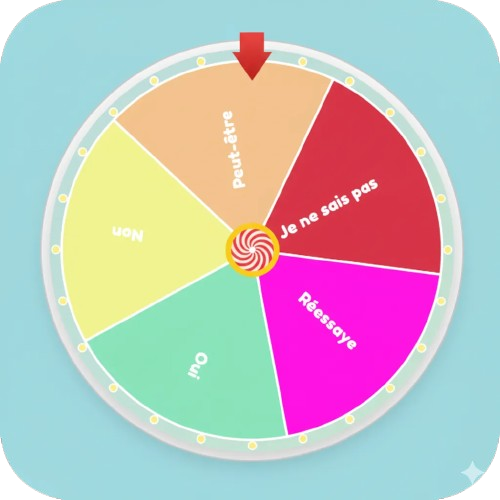
Spin the Yes/No Wheel before your ritual, pull cards with the Marseille Tarot, use the Magic 8-Ball page as an intention trigger, or explore your natal chart.
Also read: Luck rituals & psychology.










💬 Commentaires
Chargement des commentaires…
Laisser un commentaire