Why Do We Cross Our Fingers? The Surprising Origins of Popular Superstitions
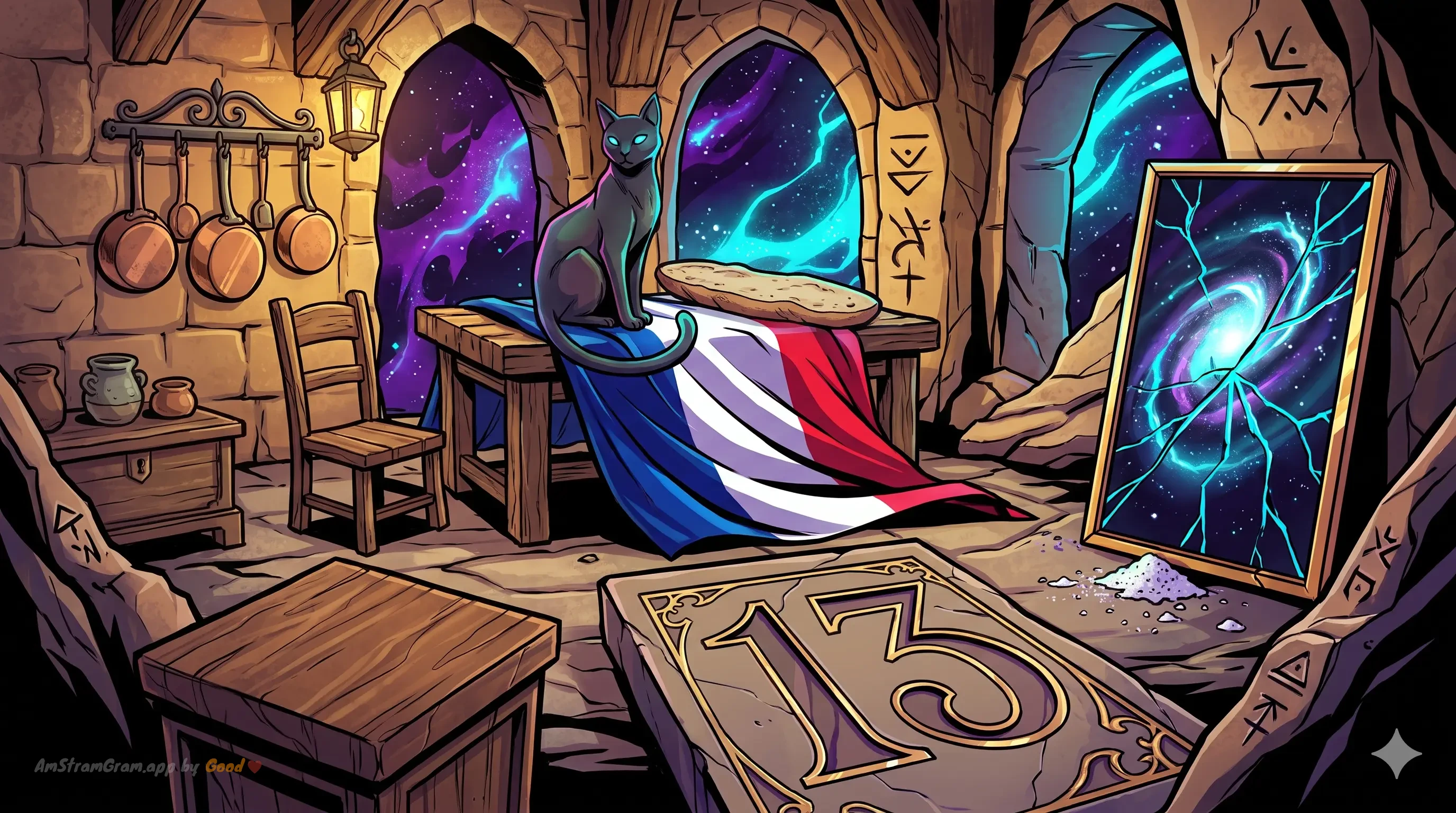
Black cat, broken mirror, upside-down bread… We do them without knowing where they come from.
Admit it: you take a detour to avoid walking under that ladder. You avoid putting the bread upside down on the table. And when a mirror breaks, you hold your breath thinking of the seven years to come… 🪞
Superstitions are part of our daily lives. We pass them on, we sometimes mock them, but we still respect them « just in case ». But where do they really come from? Behind every odd gesture lies a story: Roman, medieval, military, or pagan.
Sit back: we're going back in time to discover why we cross our fingers, touch wood, and avoid black cats. 🐱👤
🧿 The Great Classics (Explained)
🪞 The Broken Mirror: 7 Years of Bad Luck
The belief in seven years of bad luck comes straight from ancient Rome. Romans believed that life renewed itself in cycles of 7 years. Your reflection in a mirror reflected your soul; breaking it meant « shattering » that soul for the length of a cycle — seven long years.
💡 Did You Know?
To « cancel » the bad luck, you had to bury the pieces in moonlight or throw the shards into a river to the south. The Romans didn't joke about shattered souls.
🍞 Bread Upside Down
Specific to France (and a few neighbouring countries), this superstition is directly linked to the executioner. In the past, the baker reserved an upside-down loaf for the executioner — no one wanted to touch the executioner's bread. Putting bread upside down on the table was symbolically inviting misfortune or death to the table.
💡 Did You Know?
In some regions, upside-down bread was said to bring bad luck to the whole household. Today we turn it « just in case » without always knowing the origin — typical of superstitions!
🪜 Walking Under a Ladder
Two possible origins (both anxiety-inducing). The first is religious: a ladder leaning against a wall forms a triangle with the ground. This triangle symbolised the Holy Trinity; crossing it was « breaking » that sacred symbol and attracting divine wrath.
The second is military: in the Middle Ages, walking under a ladder during a siege meant risking boiling oil, stones, or arrows from the ramparts. The brain remembered: « ladder = danger ». The superstition was born.
🐱👤 The Black Cat
In the Middle Ages, the Church associated the black cat with witchcraft and the devil. « Witches » were said to turn into black cats to move about at night. Crossing a black cat without « neutralising » it (with a sign of the cross or by spitting) could bring bad luck.
💡 Did You Know?
In England and Japan, the black cat is on the contrary a lucky charm. Culture changes everything: same symbol, opposite meaning depending on the country.
🪵 Touch Wood
Pagan version: spirits and gods lived in trees. Touching wood was thanking or invoking them to protect us after a slightly presumptuous phrase (« I've never had an accident », etc.).
Christian version: the wood of Christ's Cross. Touching wood was sheltering under divine protection. The two traditions merged: today we touch any wood (or our head, for lack of better) to « not tempt fate ».
🤞 Crossing Fingers
Crossing index and middle fingers for good luck or to mentally excuse a lie (« fingers crossed = what I say doesn't count ») comes from an old belief: the cross formed a symbol of protection. In England, children crossed their fingers for a wish to come true; the gesture spread across the Western world.
💡 Did You Know?
In the Middle Ages, crossing fingers could also serve to invoke the protection of the cross against evil. One gesture, several uses depending on the era.
🧠 Psychology: The Need for Control
Why do we cling to these rituals? Because chance is scary. Uncertainty, the unknown, the idea that everything can change for no reason — all of that worries our brain. So we invent rituals: touch wood, avoid the ladder, don't put the bread upside down. These gestures change nothing objectively, but they give us the illusion of controlling a small part of the world.
Superstition is a way of reassuring our brain in the face of chance. It's human, it's cultural, and it's often funny — as long as we don't hurt anyone (and don't throw the black cat out).
👉 Chance is scary, so we invent rituals. On AmStramGram, we don't judge: we offer tools to play with chance (dice, wheel, heads or tails) or to give meaning to the day (horoscope, luck of the day).
🎯 In Summary
You don't need a four-leaf clover to make your day a success. Superstitions are stories we tell ourselves to better live with unpredictability. Mirror, bread, ladder, black cat, wood, crossed fingers: each has an origin (Roman, French, medieval, pagan, or Christian) worth knowing — if only to shine at parties. 🍀
No need for a clover to try your luck!
Test your Luck of the Day or your Horoscope to see if the stars are with you — or roll the Dice to defy pure chance.
 Roll the Dice








💬 Commentaires
Chargement des commentaires…
Laisser un commentaire