Chinese Five Elements: Your complete guide to decoding your real personality
The Chinese zodiac element completes the animal: same birth day, same animal—and still totally different life paths. Here is why.
⏱️ The element cycle: two years, not one
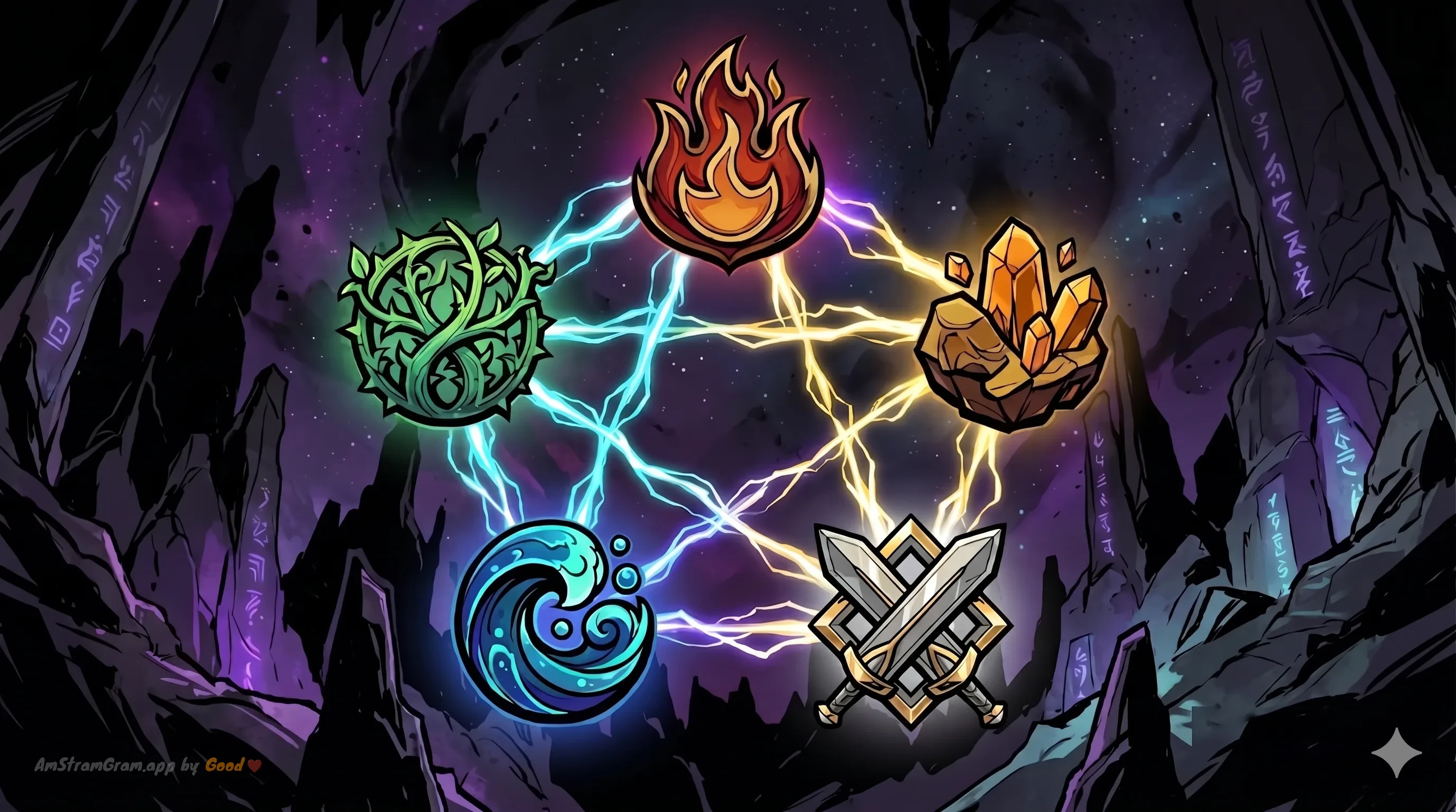
In the Chinese calendar, the twelve zodiac animals rotate one per year — that's the well-known part. Less known: the five Wu Xing elements (Metal, Water, Wood, Fire, Earth) follow a different rhythm. Each element reigns for two consecutive years, forming a complete ten-year cycle.
A simple way to find your element: look at the last digit of your Gregorian birth year.
- Years ending in 0 or 1 → Metal
- Years ending in 2 or 3 → Water
- Years ending in 4 or 5 → Wood
- Years ending in 6 or 7 → Fire
- Years ending in 8 or 9 → Earth
⚠️ Note: if you were born before the Chinese New Year of your birth year (usually between late January and mid-February), your element belongs to the previous year. Our tool accounts for this automatically.
The astrological twins paradox: why can two people born on the same day, under the same Western sun sign, feel so different—in temperament and sometimes in trajectory? Western astrology partly answers with time, place and the birth chart vs horoscope distinction. On the Chinese astrology side, the missing piece for many readers is the Chinese zodiac element: Wood, Fire, Earth, Metal or Water from the Wu Xing (五行) cycle.
Understanding your Chinese astrology temperament is not about a sticker label: it is a framework for rhythm, motivation, stress and Chinese zodiac compatibility—with agency and nuance.
Why our brains love these systems
Psychologically, humans need classification: turning complexity into categories steadies attention and speeds decisions. Symbolic systems (including Chinese sign calculation + element) also answer the drive to reduce uncertainty about the future.
The Barnum effect explains why vague lines feel personal. Where a daily one-liner can trigger that bias, Wu Xing goes further: it offers dynamic relationships (generation, control) and correspondences (seasons, directions, colours) that structure thinking beyond a static portrait.
Treat this guide as a thinking tool—not a verdict. A good astrological read is measured by the subtlety it returns about you and others.
Wu Xing: the five elements in plain English
The “five elements” are not modern chemistry: they are energy archetypes for modes of action, relationship styles and cycles. Each Chinese calendar year is tied to a branch (animal) and a heavenly stem carrying an element—hence the precision of Chinese zodiac element beyond the animal alone.
- Wood (木): growth, new ideas, idealism, grit; the sprout breaking soil.
- Fire (火): visibility, enthusiasm, drama that can inspire or drain; the flame.
- Earth (土): stability, loyalty, pragmatism; sometimes over-adapting to keep peace.
- Metal (金): structure, standards, crisp decisions; risk of coldness or harsh standards.
- Water (水): situational intelligence, intuition, flexibility; risk of withdrawal or hyper-vigilance.
“SERP domination” table: your five elements at a glance
Quick mnemonic: the last digit of your Gregorian birth year follows a ten-year pattern tied to the heavenly stems (simplified here; exact sexagenary timing also depends on Lunar New Year—use our tool).
| Element | Year ends | Dominant strengths | Weak spots | Ideal synergy |
|---|---|---|---|---|
| Wood | …4, …5 | Vision, initiative, generosity | Impatience, scattering | Water (nourishes), Fire (expression) |
| Fire | …6, …7 | Charisma, courage, speed | Impulsivity, burnout | Earth (grounding), Wood (fuel) |
| Earth | …8, …9 | Reliability, patience, synthesis | Over-routine, holding back | Metal (frame), Fire (warmth) |
| Metal | …0, …1 | Fairness, rigour, efficiency | Coldness, perfectionism | Water (flex), Earth (support) |
| Water | …2, …3 | Adaptability, diplomacy, strategy | Melancholy, withdrawal | Wood (direction), Metal (clarity) |
Stop guessing—calculate your full profile
Chinese animal plus birth context: skip rough guesses and get a coherent Chinese sign calculation on AmStramGram.
Free · Instant results
Use your element in real life
Work
Wood: builder roles (product, roadmap, launches). Fire: sales, stage, rallying teams. Earth: mediation, steady HR ops, process reliability. Metal: risk, quality, compliance manager. Water: analysis, negotiation, strategic intelligence.
Relationships
Think complementarity, not “score”: Fire can learn pacing from Earth; Metal can grow warmth with supportive Wood. For lucky symbols worldwide, read Luck symbols around the world.
Want a playful entry into chance? Spin the zodiac sign wheel and read Randomness and luck: two different illusions—great for perspective without killing the fun.
Reflection: the element you are under-using
Watch a typical week: where were you tight? Where in flow? Often what is “missing” is not another animal but a function (structure, slowing down, showing up visibly, feeding a long-term project…).
Too much Metal (control)? Invite more Water recovery (sleep, listening). Too much Fire (adrenaline)? Earth rituals (regular meals, slow walks) rebuild the base—then your Chinese sign calculation on AmStramGram will land even better.
For Western astrology, remember same sign ≠ same chart: read Birth chart vs horoscope so you do not confuse a full map with a magazine column.
FAQ
Which Chinese element is the strongest?
None sits “above” the others in Wu Xing: the model is cyclical. Power comes from balance and flow between phases—not a permanent winning element.
Can you change your astrological element?
Your year-pillar element is fixed in the sexagenary logic. You can still cultivate other-element resources (sport, framing, creativity, sleep, mentoring): that is where astrology becomes a psychological lever, not a box.
Do the five elements really affect our health?
In traditional Chinese medicine, Wu Xing links organs, emotions and environment (season, food). It is not a direct scientific equation with modern biomedicine, but a historically structured care system still used today by millions—with the same prudence as any health journey.