Gods of Luck: who holds fortune, from one culture to the next
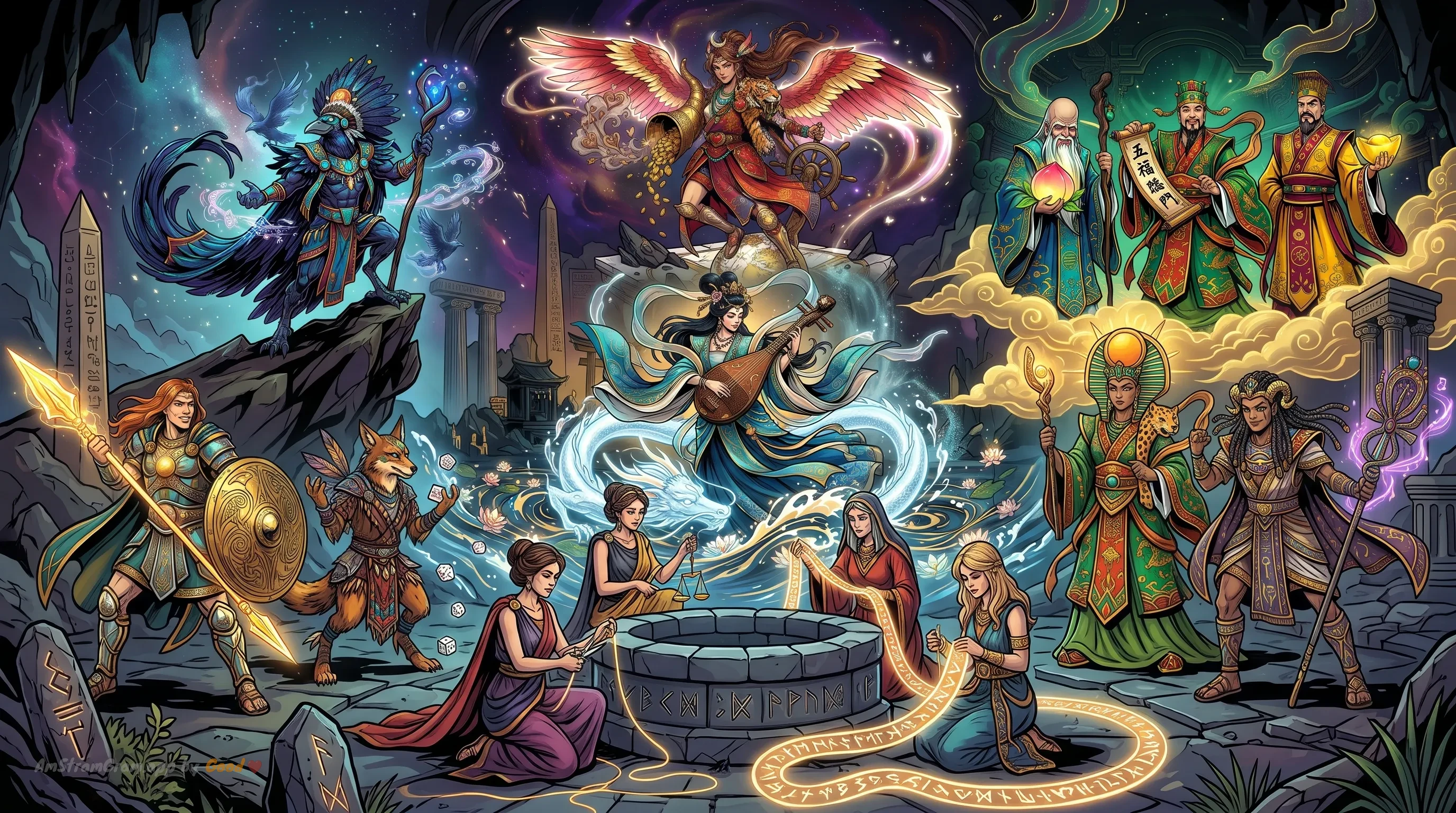
You want a name. Every culture has several, and they do not do the same job: turning luck, measuring a life, or opening prosperity.
You searched for a god’s name because “luck”, said on its own, stays vague. The ancients did the opposite: they gave a face to whatever arrives without warning. That face changes as soon as you change seas. Tyche turns a wheel. Lakshmi sits with prosperity. Fu, Lu and Shou split happiness, career and long life. Nobody on this list “brings luck” in the same way.
This page is the map. It tells you who does what, then sends you to the culture’s own article when you want the full myth. Modern chance, the kind in a draw, comes at the end: a wheel does not need a temple to turn.
Luck, fate, timing: three jobs
Before the names, keep the split. It stops you mixing gods who would argue if they shared one sky.
- Luck turns. It is good, then bad, then good again. Tyche and Fortuna stand here.
- Fate measures. The Moirai, the Norns, Shai in Egypt: they hold a length of life, not a dice roll.
- The moment is seized. Kairos, among the Greeks, is the instant when you have to act. Missing it is not “bad luck”. You arrived late.
Astrology picks up the same picture centuries later: a birth sky sets a frame, and the day adds a weather. If that frame is what you want, the astrology guide is the other door. Here we stay with the gods.
Greece and Rome: the wheel and the thread
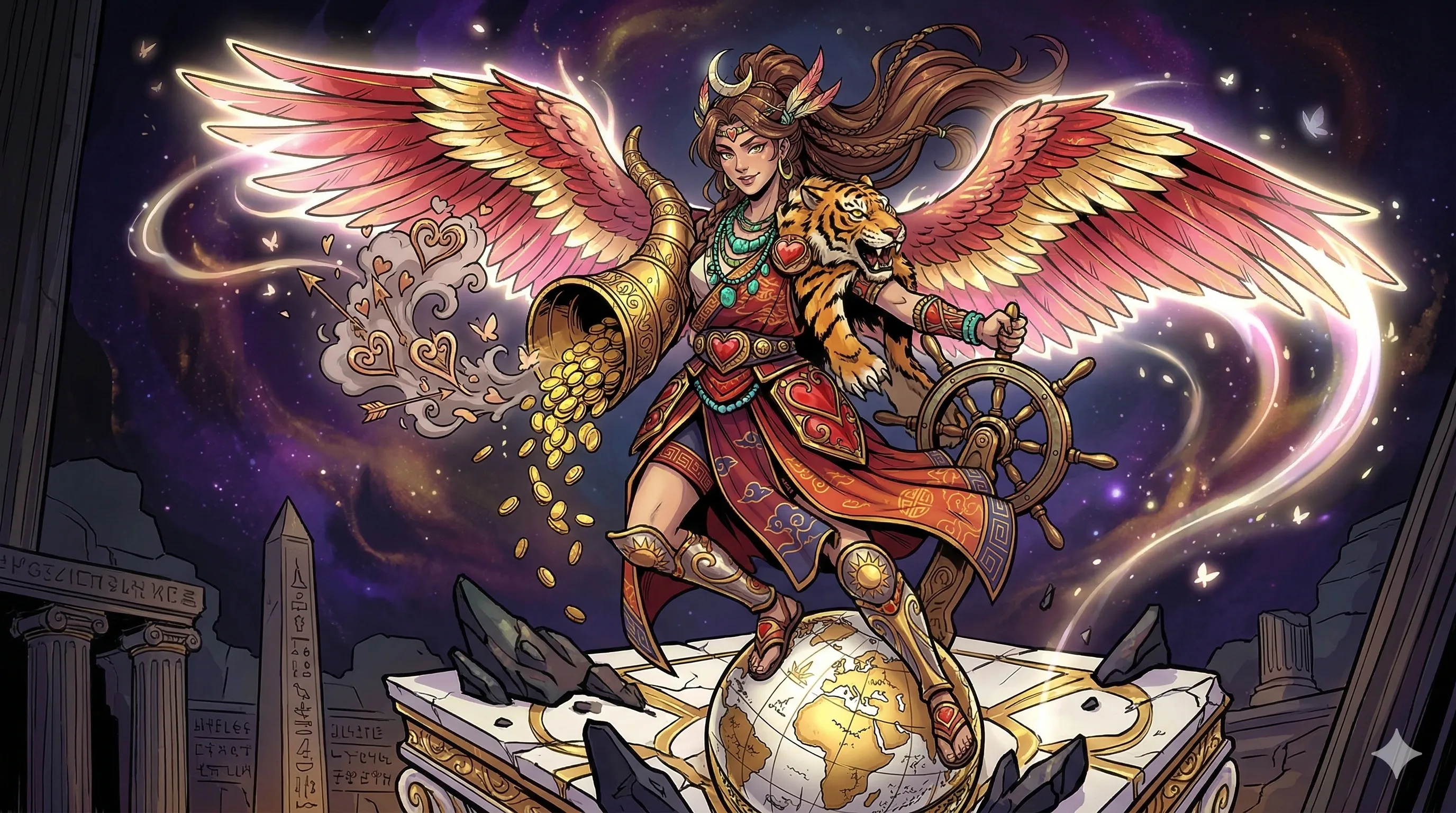
Tyche is the Greek goddess of what comes to pass. Her name means “what happens”. She is painted with a wheel and a horn of plenty: fortune rises, fortune falls, and the city that honours her hopes to stay up. Rome takes her up again as Fortuna. Same wheel, same idea, a much more public cult.
Beside them, the Moirai do not negotiate. Clotho spins, Lachesis measures, Atropos cuts. They do not “bring luck”. They fix a span. Kairos is the right moment, often painted with a lock of hair on his forehead: you catch him facing you, or you do not catch him at all. Hermes guards roads, markets and gamblers, so the chance of meetings, not the thread of a life.
Myths, attributes and the wider pantheon are in Greek gods of luck and destiny.
The North: the Norns and Wyrd
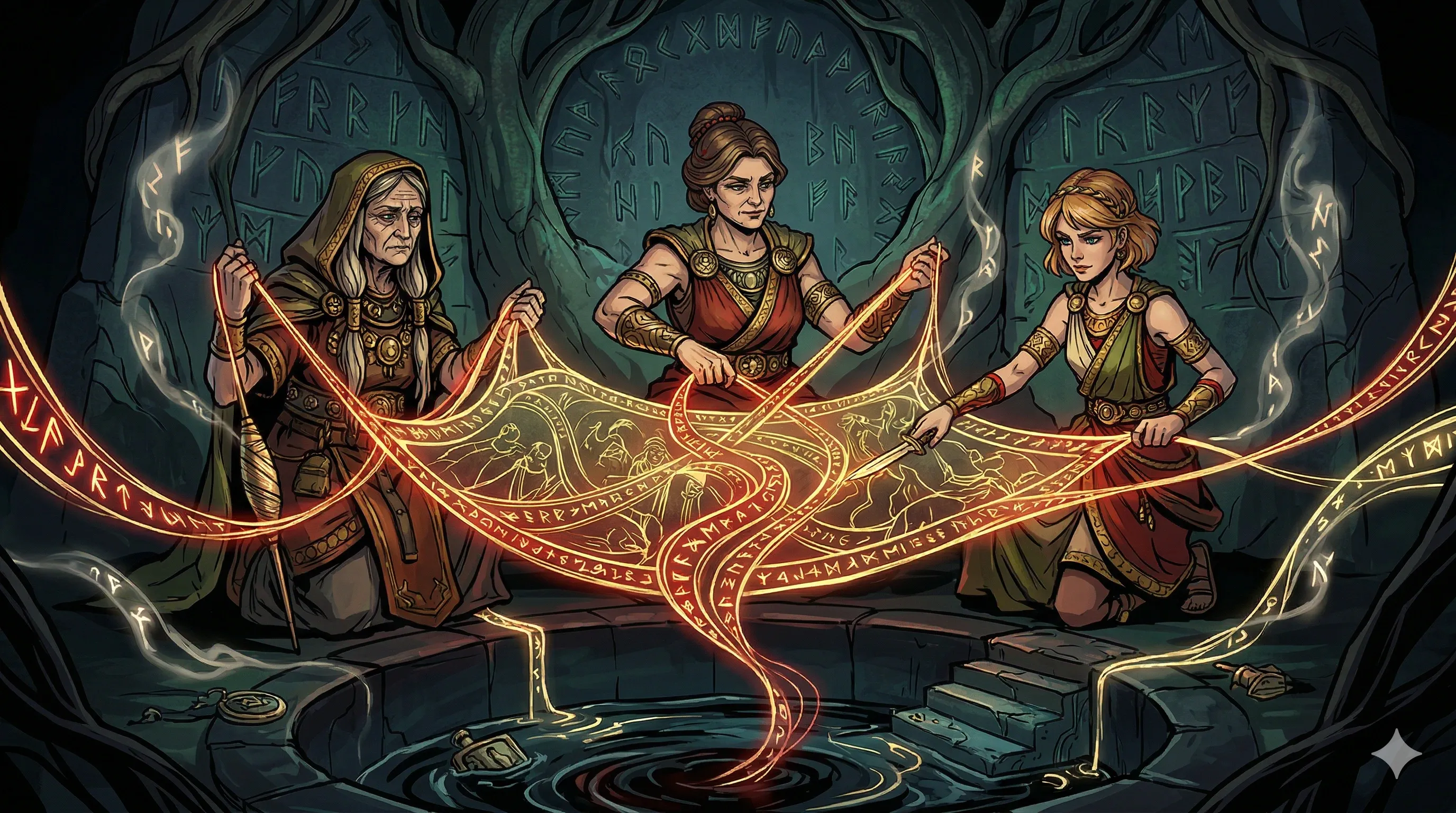
Among the Norse, the word that matters is Wyrd: what has been turned, laid down, and keeps acting. The Norns — Urðr, Verðandi, Skuld — pour the water of fate at the foot of Yggdrasil. Odin wants to know, not to cancel. Runes are a way of reading, not a wand that erases the thread.
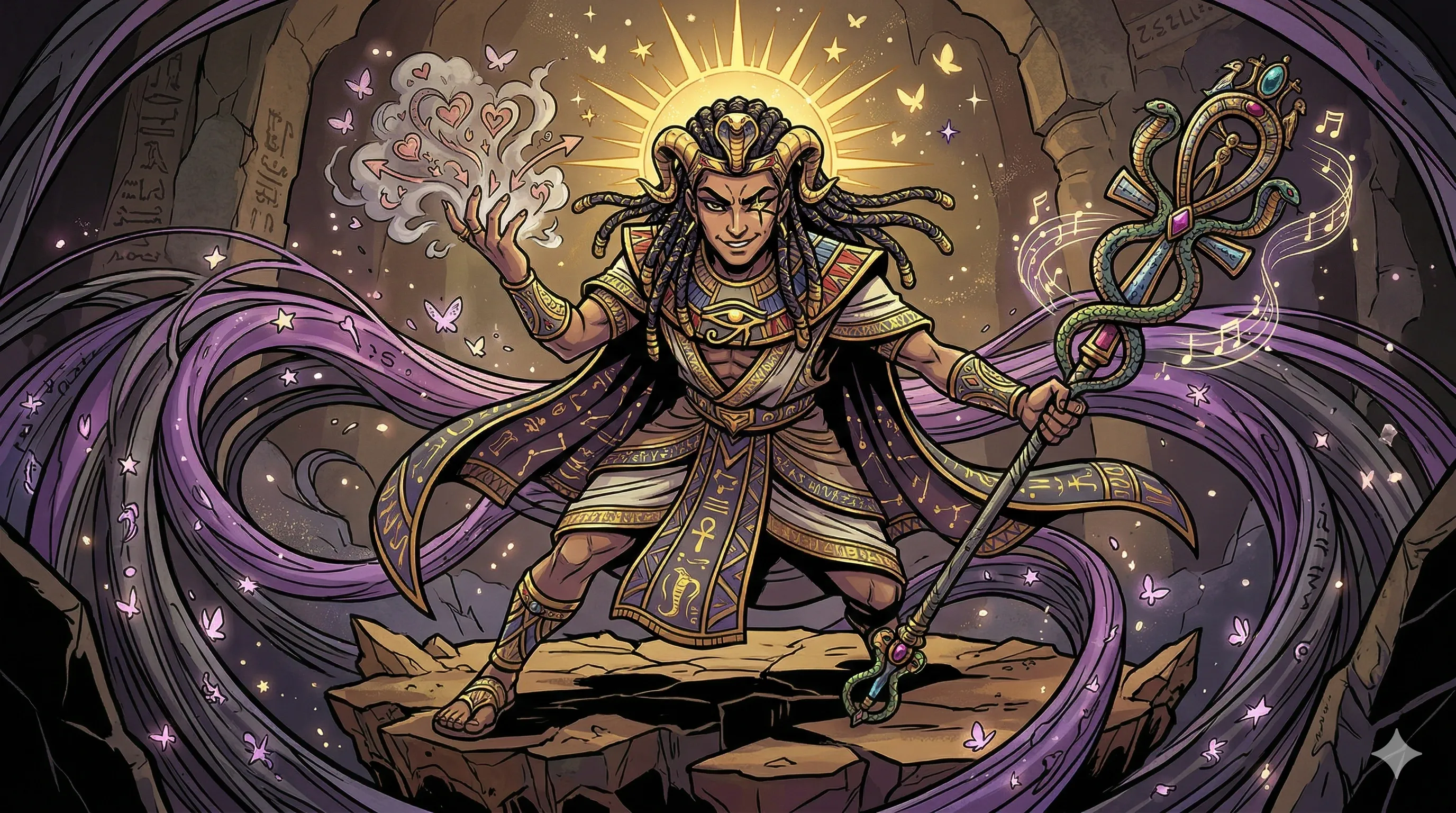
Egypt: Shai, and a magic that has a name
Shai is personal fate, often present at the weighing of the heart. Renenutet watches the name, the nurse and the newborn’s fortune. The word heka names magic as a force of the world, on a level with the order of Maat. This is not “white magic” in the modern sense. It is a technique of the cosmos, held by gods who have a precise job.
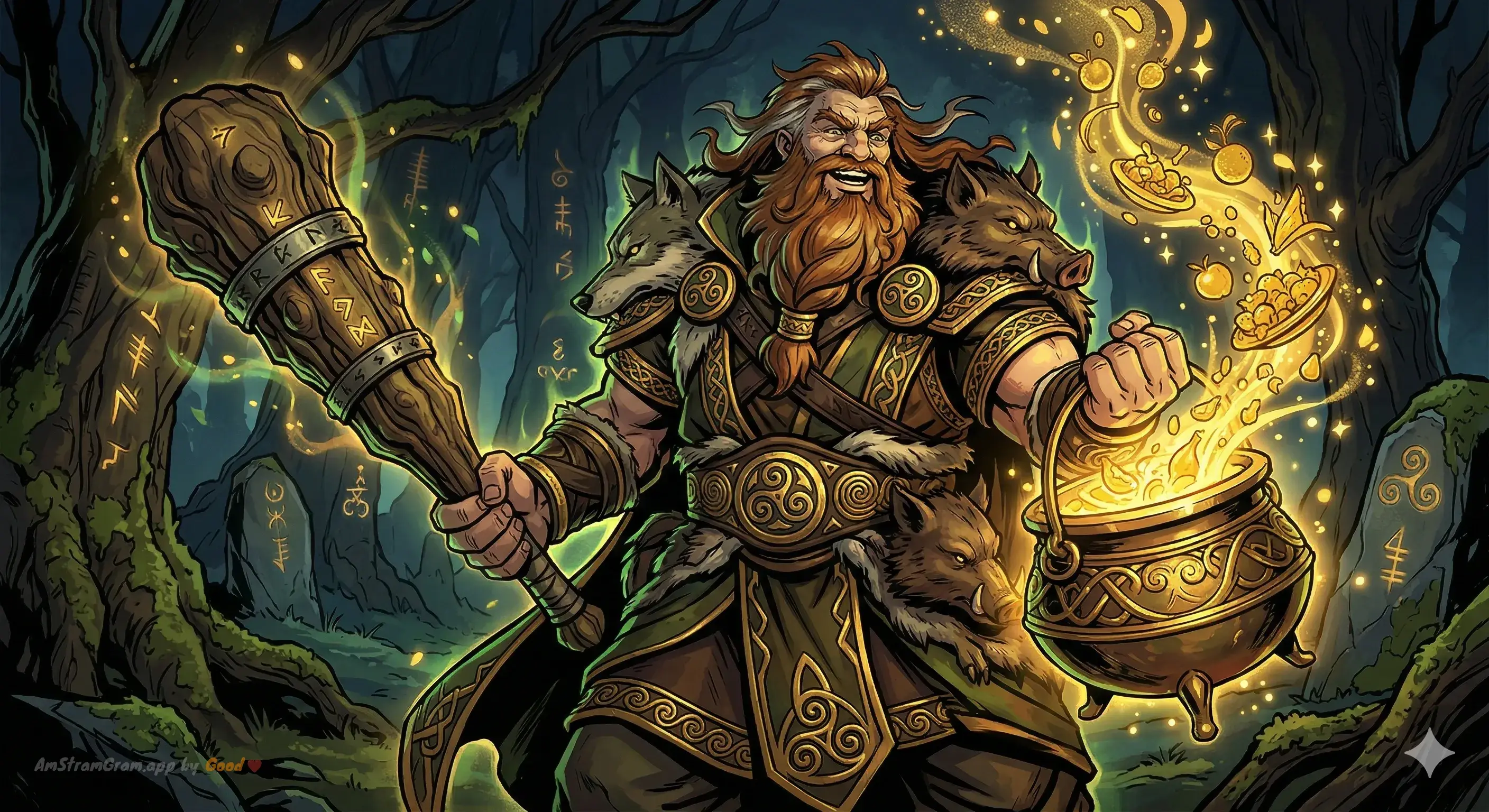
The Celts: abundance has a cauldron
The Dagda owns a cauldron that does not empty and a club that kills or gives life back. Brigid holds fire, poetry and the hearth. Lugh is the god of many skills, the one through whom a battle can turn. Celtic luck looks less like a wheel than like hospitality: you are received, or you are not. The sign people look up next — knot, triskele, raven — belongs with symbols, not with the gods themselves.
The signs that travel with these gods are gathered in the symbols guide below.
India: Lakshmi sits, Ganesha opens
Lakshmi is the goddess of prosperity, beauty and good fortune. People call her at Diwali, when houses are lit so she can find the door. She is not the luck of a die. She is the abundance that stays if the house is ready. Ganesha removes the obstacle at the start of a venture. A trade, a journey, a book: you greet him first, so the path exists.
Together they explain a very common search, “goddess of luck”. The name that comes back most often, outside Europe, is Lakshmi. Tyche answers the wheel. Lakshmi answers prosperity.
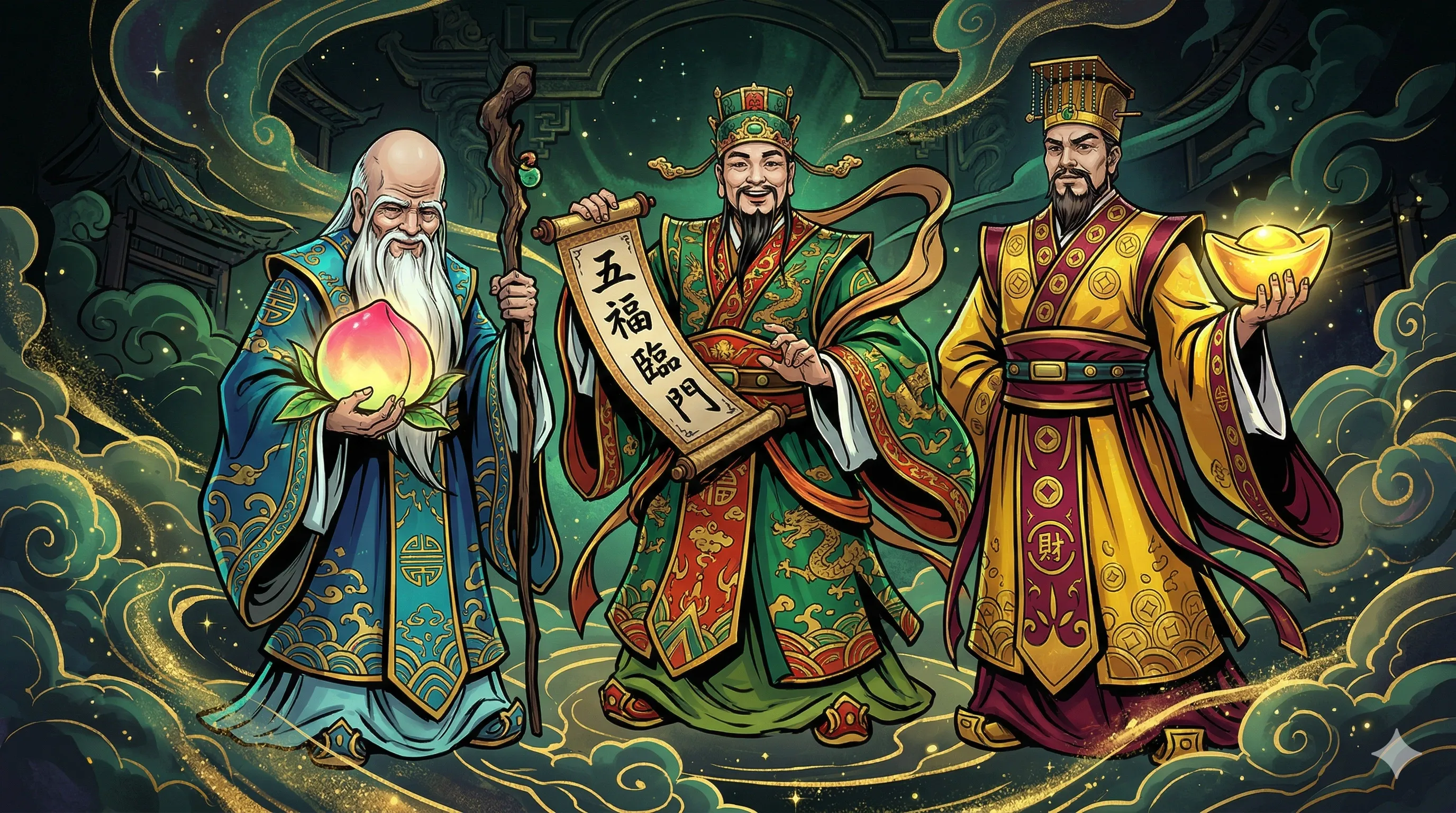
China: three stars, and the god of wealth
Fu, Lu and Shou are the three star gods. Fu brings happiness, Lu career and salary, Shou long life. You see them together, often as household statues, because a “lucky” life is counted in three shares, not one stroke. Caishen, the god of wealth, is another figure: money, specifically, especially around the lunar New Year.
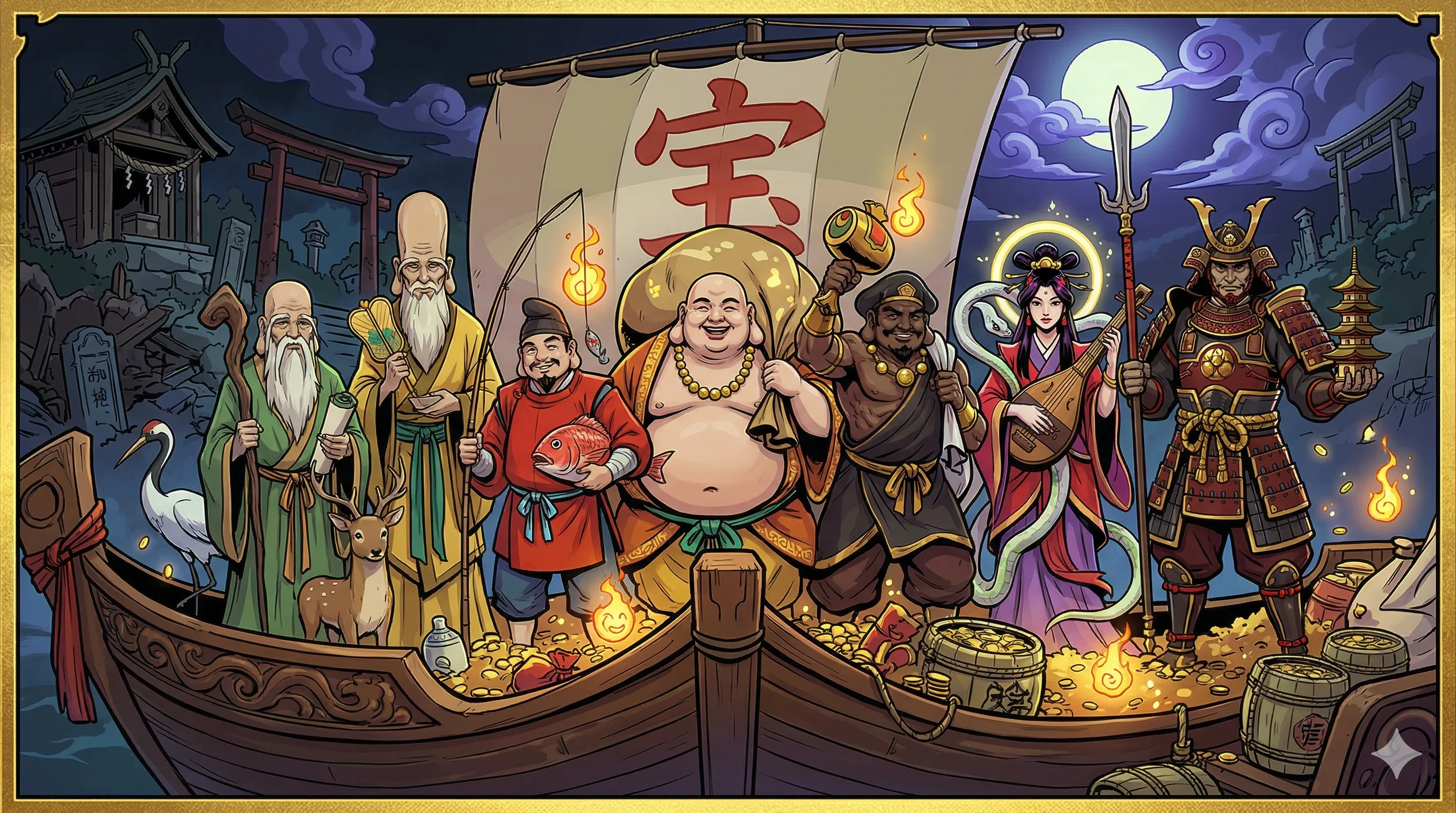
Japan: seven gods, not one lucky charm
The Shichifukujin, the Seven Gods of good fortune, travel in a boat at New Year. Each has a domain. Benzaiten holds music, eloquence and water. Daikokuten carries a sack of rice and a mallet. Ebisu fishes, and protects honest work. Bishamonten is a warrior. Asking for “the” Japanese god of luck already picks the wrong unit: happiness is a boat, not one person.
Next: Japanese gods of luck.
The Americas: the trickster teaches by making you miss
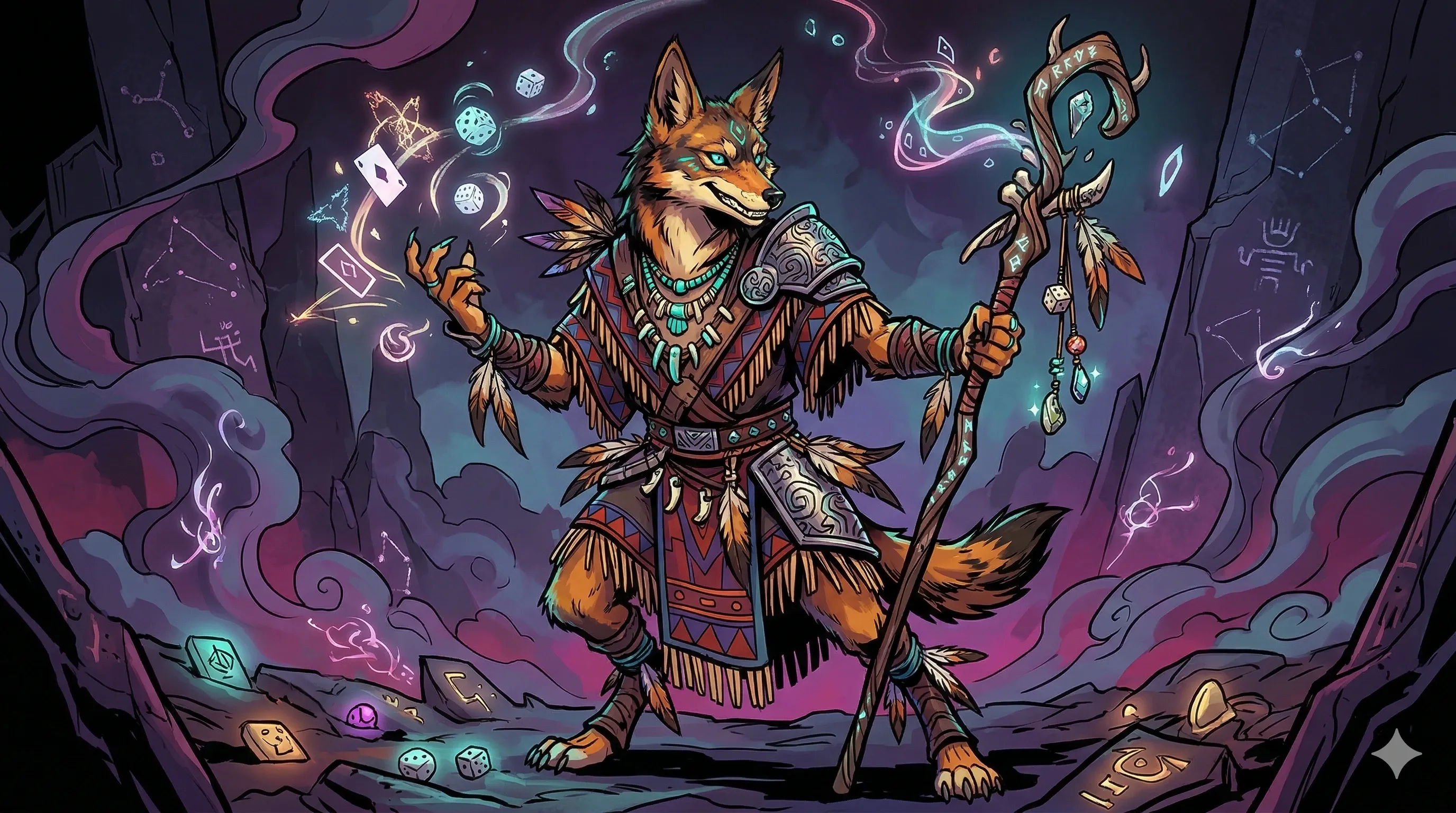
Coyote, Raven and other trickster spirits do not guarantee a win. They move the rules. “Luck” there is a lesson: you leave the story less naive, sometimes poorer, sometimes with fire. That is not Fortuna. It is a teacher who cheats so the story can move.
What these gods share
A wheel, a thread, a cauldron, a boat, a lamp in the window. The picture changes. The human gesture stays: name what escapes you, then be ready when it passes. The objects people set on a table — clover, coin, blue eye — are the younger siblings of these cults. They live apart, in luck symbols from around the world.
And white magic, in all this?
When you look up a luck ritual, you are often looking for a short gesture that calls one of these names. Modern white magic is that recent layer: a candle, the moon, an intention, sometimes a god borrowed from the list above. It does not replace the myth. It uses it. The guide to the gestures, without mixing the pantheons, is here: white magic and luck.
Short questions
Who is the Greek god of luck?
Tyche. Fortuna is the Roman counterpart. The Moirai handle fate, not a stroke of luck.
Which goddess of luck is named most often outside Europe?
Lakshmi, in India, for prosperity. In Japan people do not name one goddess. They name the seven.
Who are Fu, Lu and Shou?
The three Chinese star gods of happiness, career and long life. The god of money, separately, is Caishen.
Are luck and fate the same thing?
No. Luck turns. Fate measures a span. A draw imitates the first. A birth chart moves toward the second.
The wheel, without calling a god
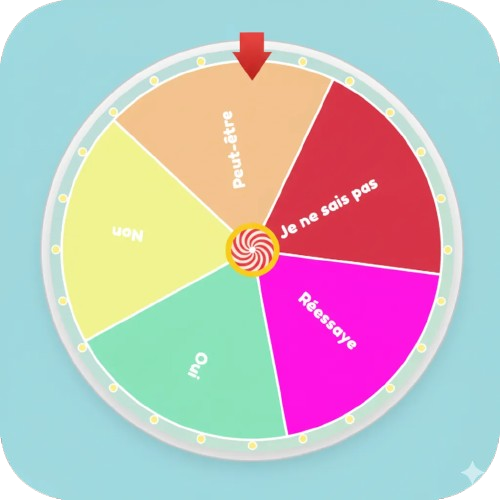
The ancients gave a name to whatever turns. You can just spin the wheel of destiny and read the result.
 Spin the wheel of destiny










💬 Commentaires
Chargement des commentaires…
Laisser un commentaire